Saw with LD. An absolute delight. Maeve Higgins is just wonderful. Will Forte does Will Forte things with aplomb. I thought it was Edgar Wright meets Stranger Things (kinda.)
Saw with LD. An absolute delight. Maeve Higgins is just wonderful. Will Forte does Will Forte things with aplomb. I thought it was Edgar Wright meets Stranger Things (kinda.)
The Chess Sets used at the World Chess Championships cost $350 (plus $700 if you want the electronic piece tracking), are likely out of stock if you’d like one, take a lot of training and practice to make, are woodworked in Amritsar, India, and were designed by Daniel Weil, a former partner at Pentagram.
About half the set’s value lies with the most difficult piece to make: the Knight ♘

Here’s Design Week on their conception. More on this Business Insider video.
Battling cancer for 9 years without telling anyone is the most Norm Macdonald shit ever.
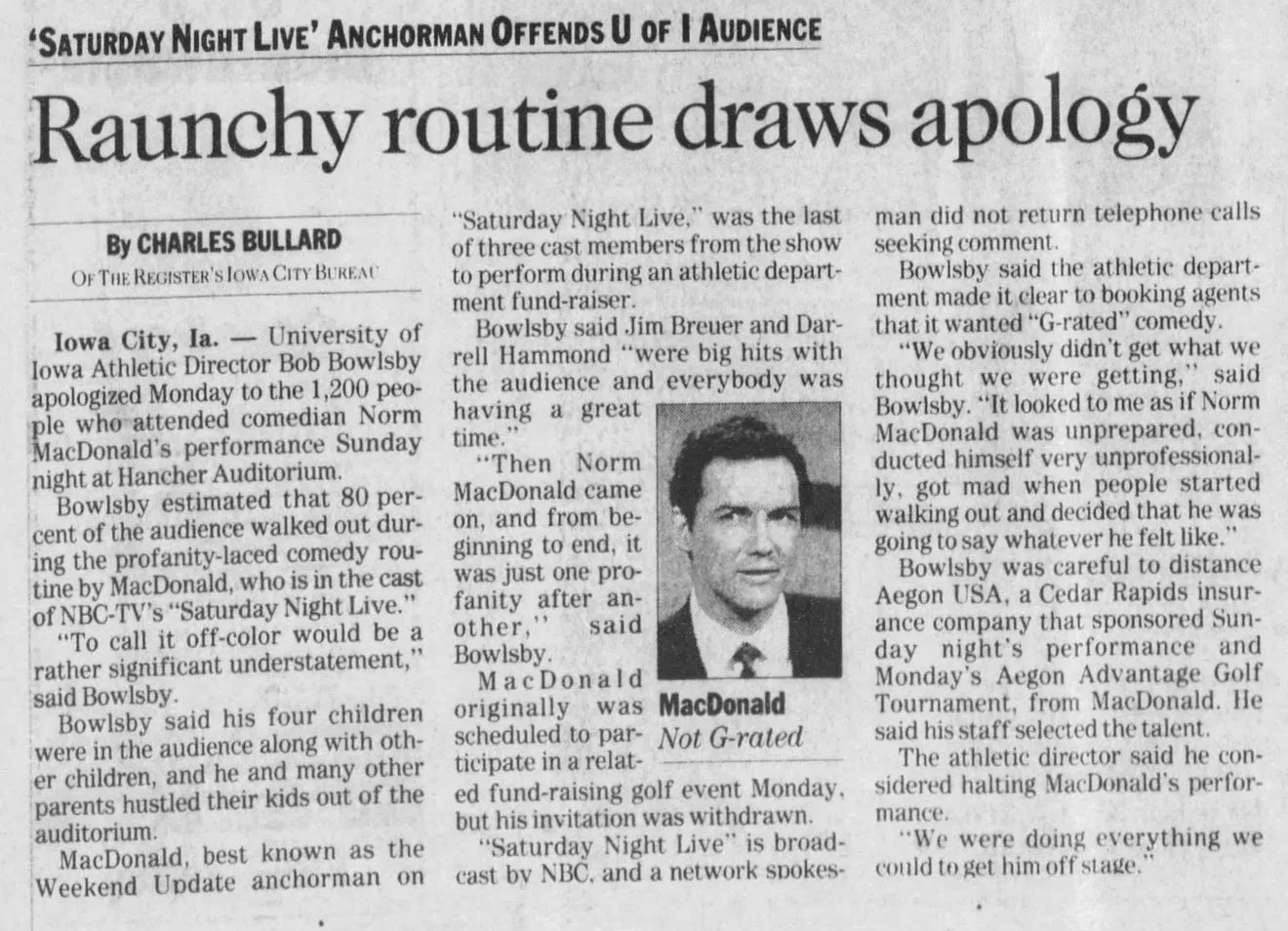
I had no idea that he performed at the Hancher Auditorium at The University of Iowa in 1997 and mortified most of a crowd of 1,200 excited kids and their parents who’d come to see him, Darrell Hammond, and Jim Breuer at the height of their SNL fame. The 250 or so who’d remained appear to have had a fantastic time:
"When Norm took the stage he immediately launched into a bit that was intentionally supposed to be offensive to most of the audience. As it went on, people got up and left in large numbers. Each time a new group would leave, he would make a remark like, ‘Did you think I was going to do airline jokes?’ or ‘Did you think I was going to hold up a picture of the Ayatollah and make a joke?’ Then he would double down on the dirty material to see how many more people he could drive out. It was clearly a game to see if he could empty out the place and after some time probably over two-thirds of the crowd had left.
[…] "Whoever booked the show comes in the green room all sweaty with his tie askew. He looked like he had seen a ghost. He says ‘You gotta go get him.’ Me, pull Norm off the stage? I’m not getting him. Breuer was laughing. He says, ‘I’m not getting him.’
"Me [Hammond] and Breuer knew something special was happening. He and I got chairs and sat on the side of the stage where nobody could see us. It was one of the most-brilliant shows I’ve ever seen.
"Anybody who thought Norm would change his act was sorely mistaken. Norm just didn’t care.
“He’s revered in the comedians’ world. He doesn’t bother with pretenses or correctness. He’s probably the original politically incorrect comedian. It’s not for a shock factor. It’s just who he is.”
Here’s The Des Moines Register’s report:
Here’s Jim Breuer on the incident:
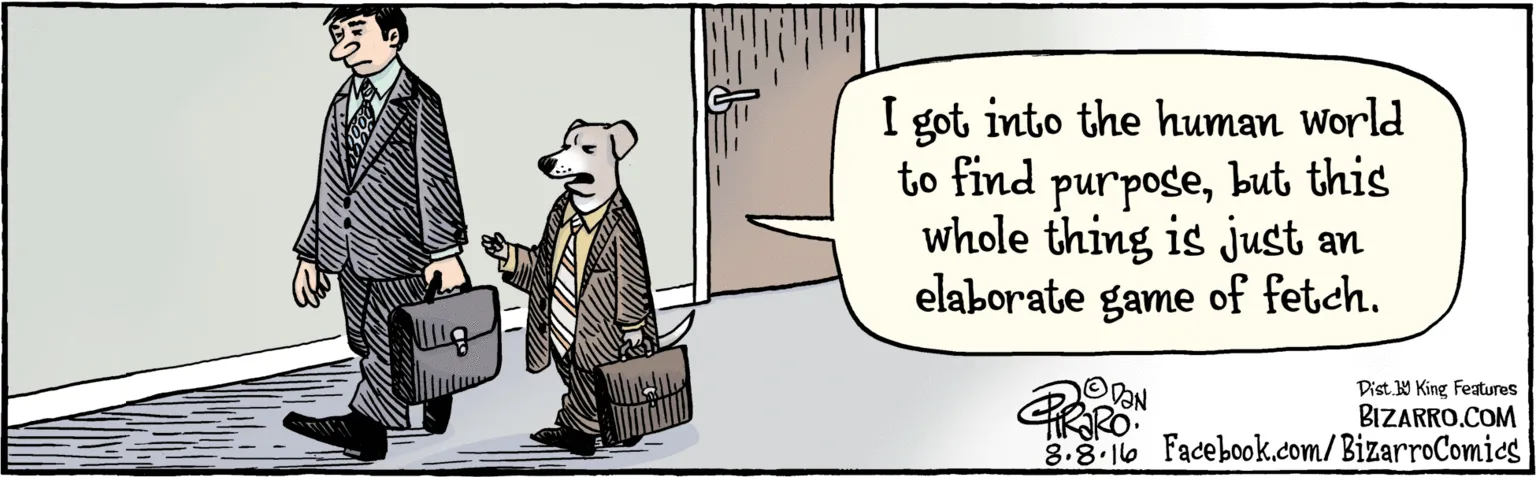
Danny Pudi keeping it real.
“Uh… a luxury you can’t live without.”
“A luxury I can’t live without… Coffee. I really like it.”
“Luxury… you can get it anywhere.”
“Ah I guess, yeah. Like good coffee…”
“I love coffee too.”
“I like nice socks.”
“Socks. Your socks you would put in your shoes.”
“Yeah. I really love them. I like kind of like you know, cozy feet.”
“You’re attracted to your socks.”
“I’m attracted to really nice running socks. Like I’m always looking for good running…”
“That’s not a luxury, though. Coffee and socks are not a luxury all.”
“Alright give me a luxury. What luxury should I have?”
“Private plane.”
“Larry. I’m on Duck Tales.”
Saw with NN. At least twice as long as it needs to be. Didn’t care about the score. It’s three hours of Vijay doing Vijay things with gusto. Spoiler: I understand that mass Indian entertainers, particularly the South Indian ones, have a tenuous relationship with reality. But we are to be OK with two siblings, born five years apart, looking like facsimiles of each other. They didn’t even bother shaving the mustache of the younger bro. Come the fuck on.
Saw with BE and NN. Eh. Clear messages about creatives’ struggles and temptations, and the importance of continuing to tell past and present stories of horrific pain and suffering.
I suppose I just lazily wanted to watch a well-made scary movie without actively engaging with it, without searching for the clever and occasionally deep symbolism that has come to characterize a movie with Jordan Peele’s name on it. It was adequately scary.
The title of Anthony’s piece [“Say His Name”] also is recognizable as a play on the Say Her Name slogan meant to memorialize victims of anti-Black violence and police brutality such as Breonna Taylor and Sandra Bland. The recognition of that inference is the only point of connection to it.
Beyond that, little about the plot makes a statement about over-policing or the socio-economic violence that gentrification creates by destroying and displacing low-income communities. Its characters blithely discuss these concerns over drinks or Brianna’s well-appointed living room, but only as part of a litany of urban ills. The sequences are the film’s ways of throwing a message that’s on-brand for 2021 behind a horror movie meant to speak to an audience that supports protests against racial injustice and biased policing in principle without having any actual skin in the game.
To those impacted in a real way by these issues or savvy enough to recognize when they’re being used as mechanisms to impart a sense of relevance, they come across as didactic nonsense. All that noise strangles the twin melodies that make up the Candyman character’s siren song: seduction and legacy.
Speaking of these “twin melodies”: I haven’t seen the 1992 original and it’s on my list. Didn’t know that Philip Glass did the score for the movie.
In many cases, you’re staring at the face of someone who lived centuries ago. That was their hair, their nose, their eye-lashes, their sleep. Very few things are more fascinating than this.
The Borremose Man died in the 7th century BCE. He was bludgeoned to death from the back of his head and had a rope with a slip knot tied around his neck. It is believed that he was a human sacrifice. He was found in the Borremose peat bog in Himmerland, Denmark in 1946. Shortly after, two other, less well preserved, bodies were discovered in the same marsh. Credit: Danish National Museum/Wikimedia Commons

The face of the Tollund Man. Credit: Sven Rosborn/Wikimedia Commons

The Yde Girl died sometime between 54 BCE and 128 CE at an approximate age of 16 years old. She suffered from scoliosis and had long reddish blonde hair that was preserved by the swamp. She was buried with a ritually tied woolen braid around her neck suggesting she was killed as a human sacrifice. However, due to damage to the body at the time of discovery, the cause of her death is unknown. She was found outside the village of the village of Yde, Netherlands. Credit: Drents Museum/Wikimedia Commons

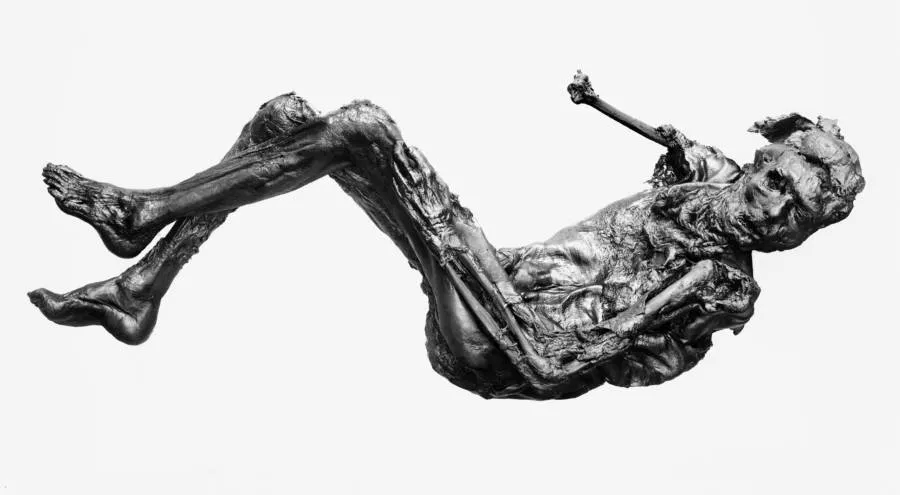
The Grauballe Man died during the late 3rd century BCE when he was around thirty years old. He was found naked, with no indication of any clothing around him. His neck was slit from ear-to-ear in a bog in Jutland, Denmark in 1955. His well-preserved hair was likely dark brown during his life but was turned red by the bog. Historians believe he was likely a human sacrifice. Credit: Sven Rosborn/Wikimedia Commons
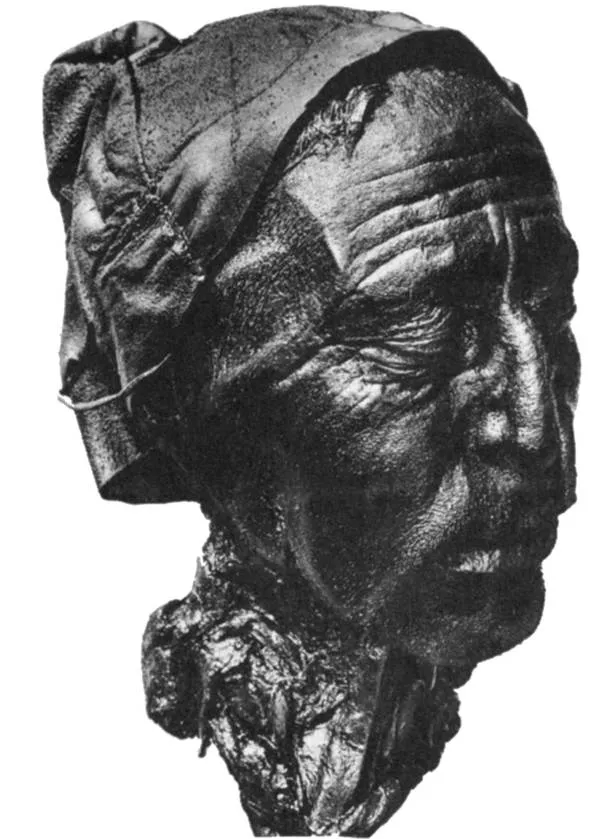
The Tollund Man was an approximately 40-year-old man who was killed sometime between 375 and 210 BCE. He was found with a noose around his neck, indicating he was hanged to death, as well as a sheepskin cap on his head. He was found in a bog outside of the Danish town of Silkeborg in 1950. Credit: Wikimedia Commons
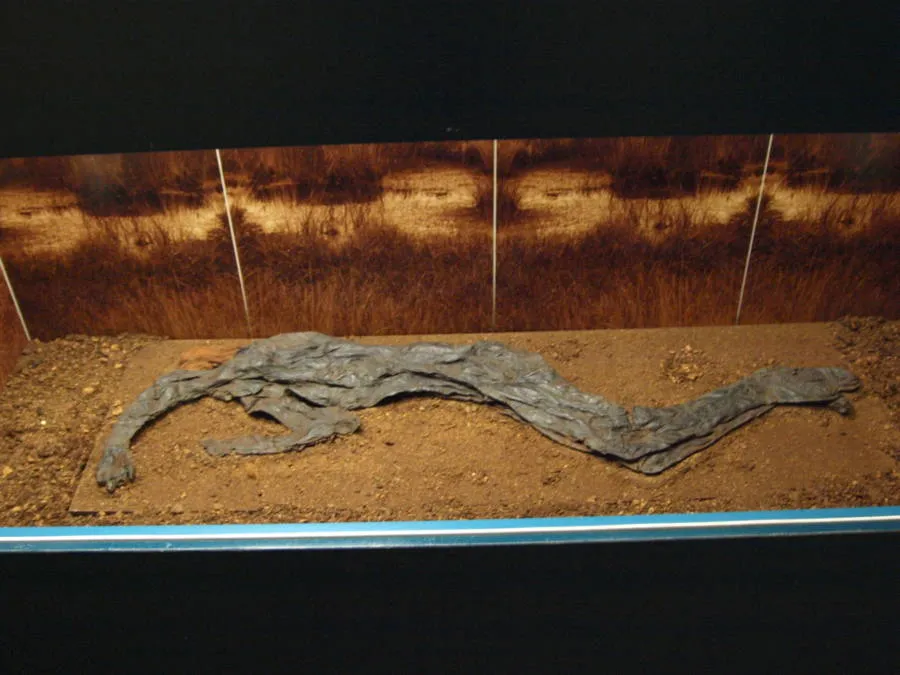
The Damendorf Man died around 300 BCE and had his body squashed flat by the weight of the peat that accumulated on top of him. He was found in a bog outside the German town of Damendorf in 1900 with a leather belt, shoes, and a pair of breeches. Credit: Bullenwächter/Wikimedia Commons
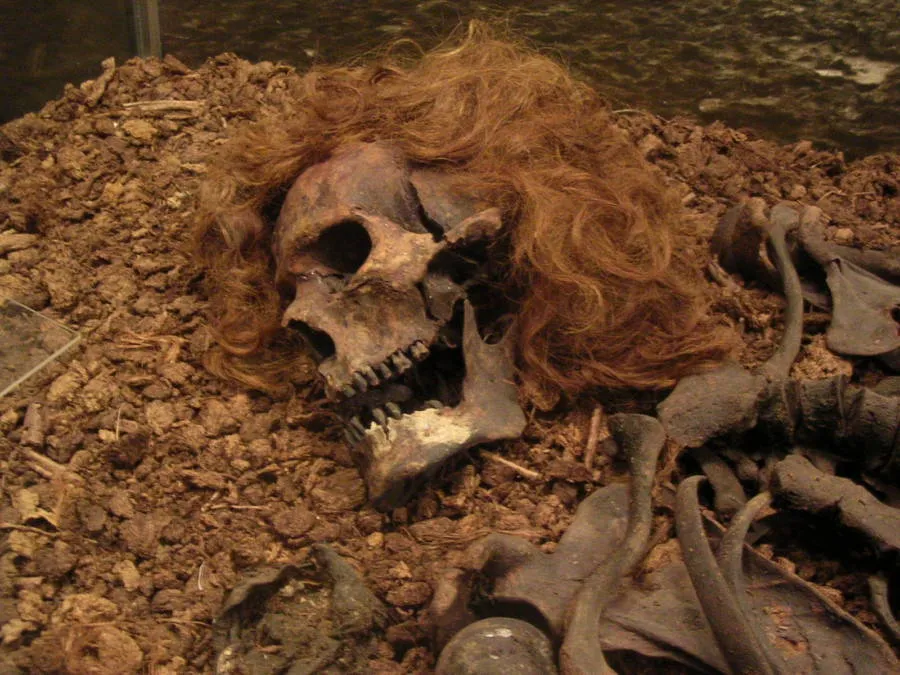
The Bocksten Man likely lived sometime between 1290 and 1430. He was a tall, slender man, most likely in his 40s at the time of his death. He was killed and impaled with two wooden poles, one that went directly through his heart, to the bed of a lake that would later become a bog. This impaling likely happened after his death as he also has a large wound on his head. He was found in a bog near Varberg Municipality, Sweden in 1936. His hair was found perfectly preserved, and he was also discovered with a hooded garment and an engraved leather sheath. Credit: Peter Lindberg/Wikimedia Commons

The Arden Woman lived during the 14th Century BCE and was around 20–25 years old at the time of her death. She was found in the Bredmose bog in Hindsted, Denmark in 1942. Police said the corpse was found in a ‘question mark’ shape. Her well-preserved hair was dark blond, drawn into two pigtails, and coiled around the top of her head. Unlike some bog bodies, she was found with garments and with no evidence of a violent death. Credit: P.V. Glob/Wikimedia Commons

The full body of The Grauballe Man. His hands were so well preserved that researchers were able to take the fingerprints of the over 2,000-year-old body. Credit: Colin/Wikimedia Commons
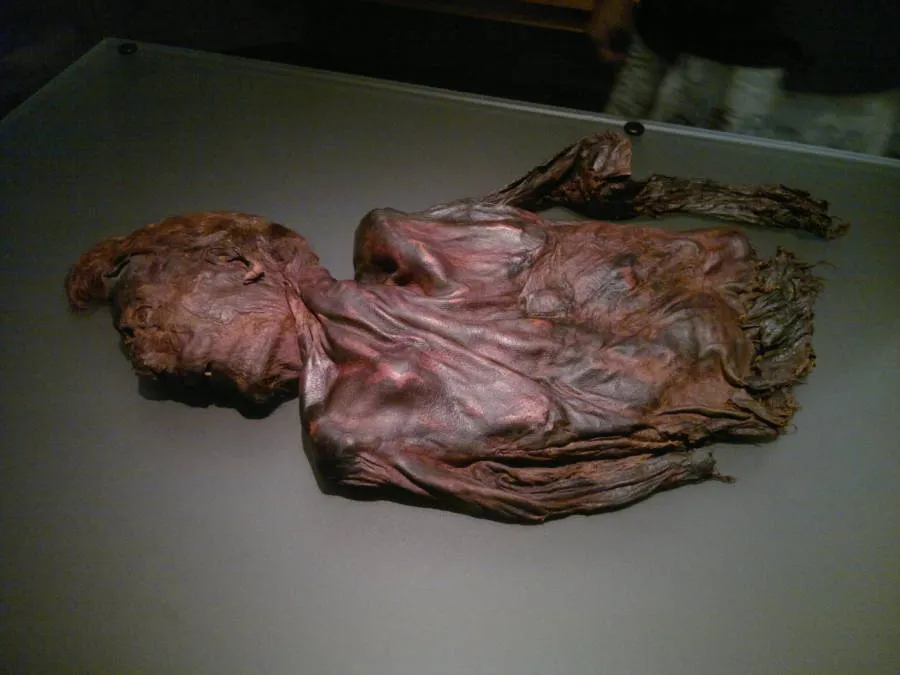
The Clonycavan Man was an Irish man who died sometime between 392 BCE and 201 BCE. He was 5’2, with a squashed nose, crooked teeth, and gelled-up hair. He was killed by an ax blow to the back of his head. The Clonycavan Man was discovered in 2003 in Clonycavan, Ireland when he was picked up by a modern peat harvesting machine that mangled his lower body. His rich diet, imported hair gel, and death near a hill used for kingly initiation led historians to theorize that he was a king who was ritually sacrificed after a bad harvest. Credit: Mark Healey/Wikimedia Commons

The Kreepen Man was a body discovered in a bog in 1903 near Verden, Germany. The body had twisted oak and willow branches binding his hands and feet. After its discovery, the body was sold to The Museum of European Cultures in Berlin but was destroyed when the city was bombed during WWII. Hair found at the site believed to belong to the Kreepen Man, date to between 1440 and 1520, but without the body, the genuine date of death is unknown. Credit: Andreas Franzkowiak/Wikimedia Commons

The Huldremose Woman died sometime between 160 BCE and 340 CE and was over 40 years old at the time of her death. She had a rope around her neck indicating she may have been strangled or hanged to death. There is also a laceration on one of her feet. She was found with an elaborate wool plaid cape, scarf, and skirt. She was found by a school teacher in 1879 in a peat bog near Ramten, Denmark. Credit: Kira Ursem/Wikimedia Commons
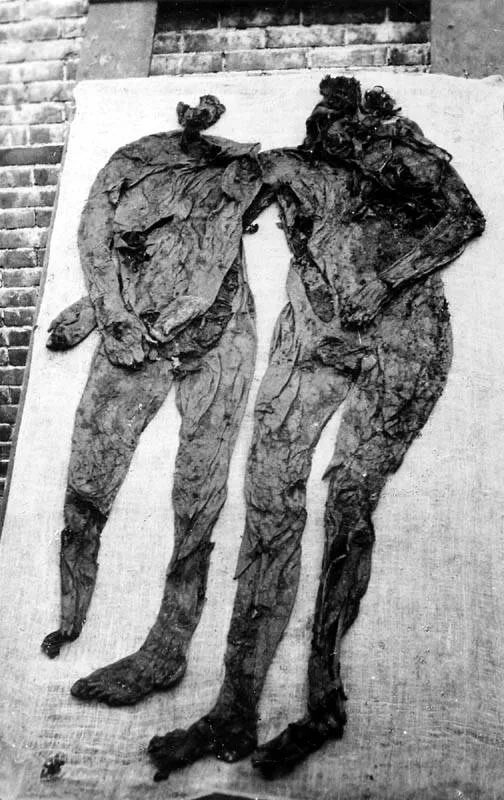
The Weerdinge Men are two naked bog bodies found in Drenthe, the Netherlands in 1904. They would have lived sometime between 60 BCE and 220 CE. One of the men had a large cut in his abdomen, through which his intestines spilled out, which some historians believe indicates that he was cut open so an ancient druid could divine the future from his entrails. Credit: Wikimedia Commons
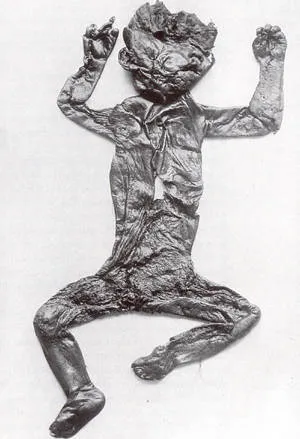
The Röst Girl is thought have died sometime between 200 BCE and 80 CE in a bog in the Schleswig-Holstein state of Germany. She was discovered in 1926, but the cause of her death is unknown because her body was destroyed during WWII. Credit: Wikimedia Commons
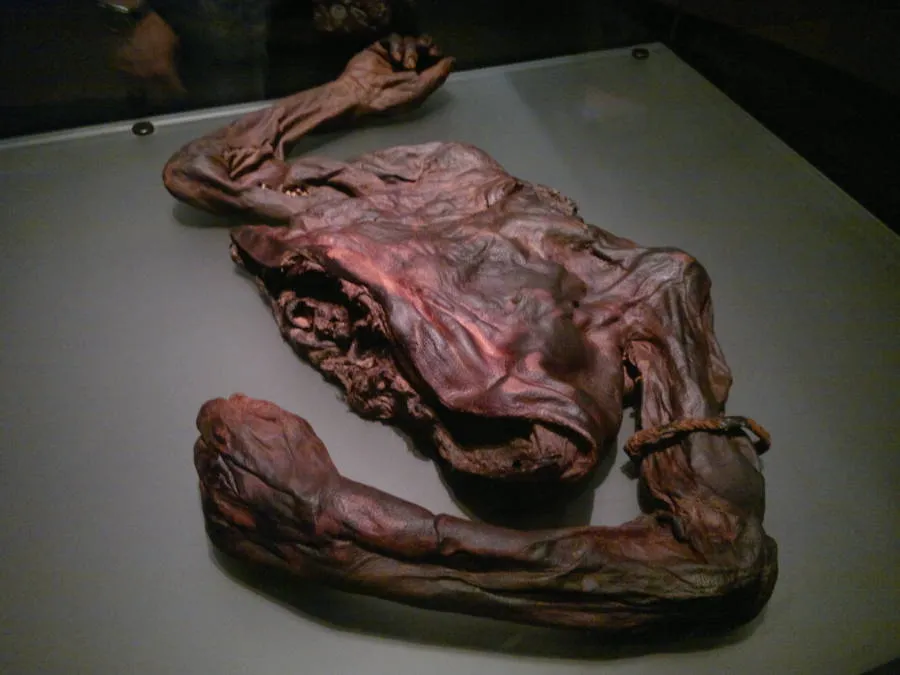
The Old Croughan Man lived sometime between 362 BCE and 175 BCE and would have been around 20-years-old at the time of his death. This torso, missing the head and lower body, was discovered in 2003 in a bog near Croghan Hill in Ireland. From his arm-span, it is believed he would have been 6’6. Credit: Mark Healey/Wikimedia Commons
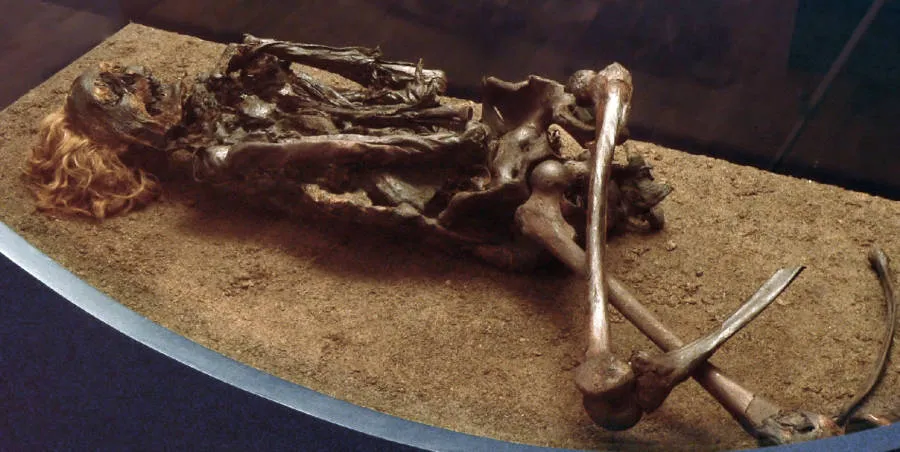
Roter Franz died in the Bourtanger Moor, on what is now the border of Germany and the Netherlands, sometime between 220 and 430 CE during the Roman Iron Age. The name Roter Franz (meaning Red Franz in English) is derived from the red hair and beard discovered on the body. He was killed when his throat was slit and had an arrow wound on his shoulder. Credit: Axel Hindemith/Wikimedia Commons

The Osterby Head was discovered in 1948 in a bog to the southeast of Osterby, Germany. The man whose head this belonged to lived sometime between 75 and 130 CE and was 50 to 60 years of age when he died. Evidence shows that he was struck in the head fatally and then beheaded. His hair was tied in a Suebian knot, indicating he was likely a free man of the Germanic Suebi tribe. Credit: Andreas Franzkowiak/Wikimedia Commons

The Kraglund Man was discovered in 1898 in Nordjylland, Denmark. He is believed to have been male, but there is little documentation, and the body has been lost. He was the first bog body to be photographed before being moved from where it was discovered. Credit: Georg Sarauw /Wikimedia Commons
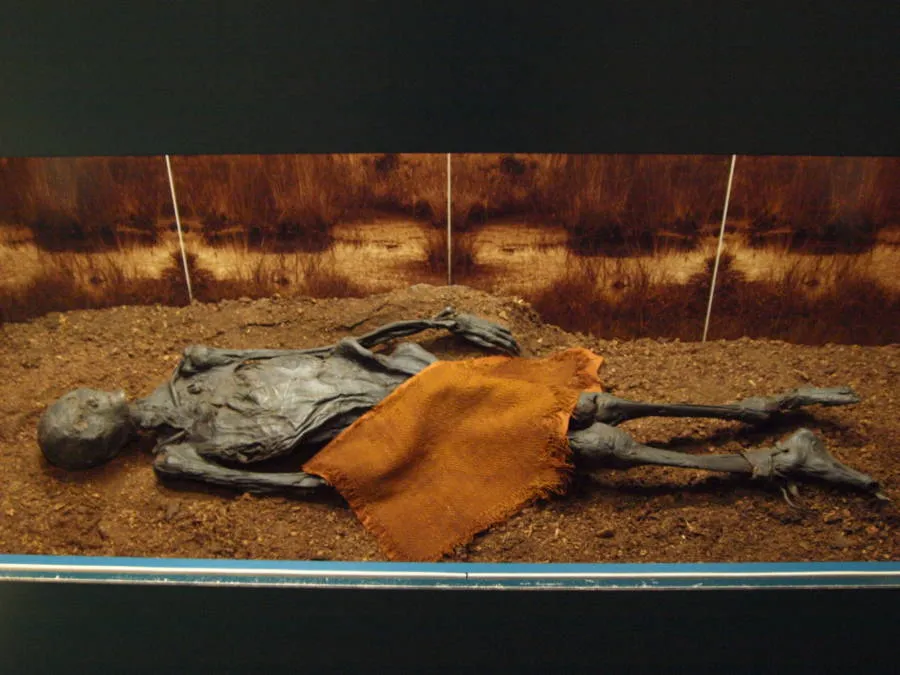
The Rendswühren Man was a 40 to 50 years old man who died in the 1st century CE. He is believed to have been beaten to death and was buried with his clothing, a rectangular wool cloak, and a fur cape. He was discovered outside the town of Rendswühren in Germany in 1871. Credit: Andreas Franzkowiak/Wikimedia Commons
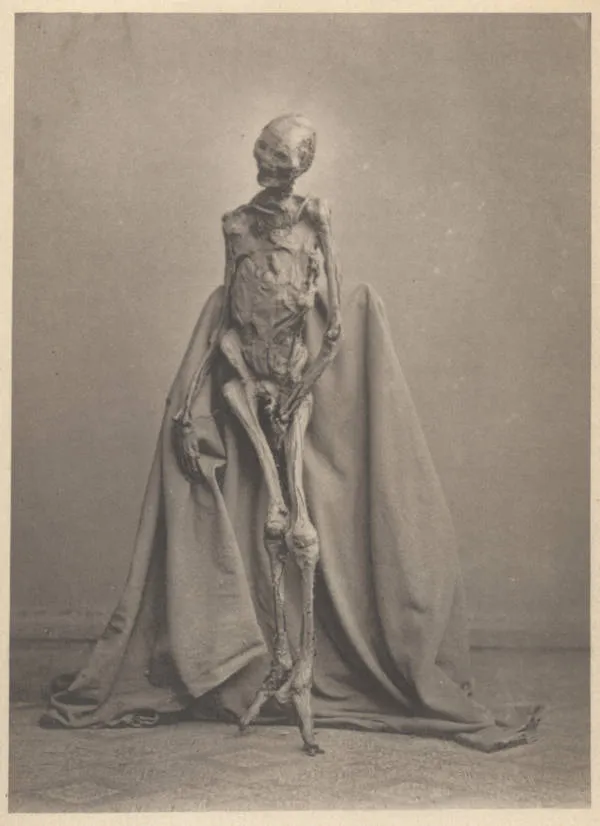
A picture of the Rendswühren Man taken in 1873, two years after he was discovered. Credit: Johanna Mestorf/Wikimedia Commons

The Roum Head was found in Himmerland, Denmark, and belonged to a man in his 20s who died during the Iron Age. The find was originally titled as “The Roum Woman” until traces of beard stubble were found on the face. Credit: Wikimedia Commons
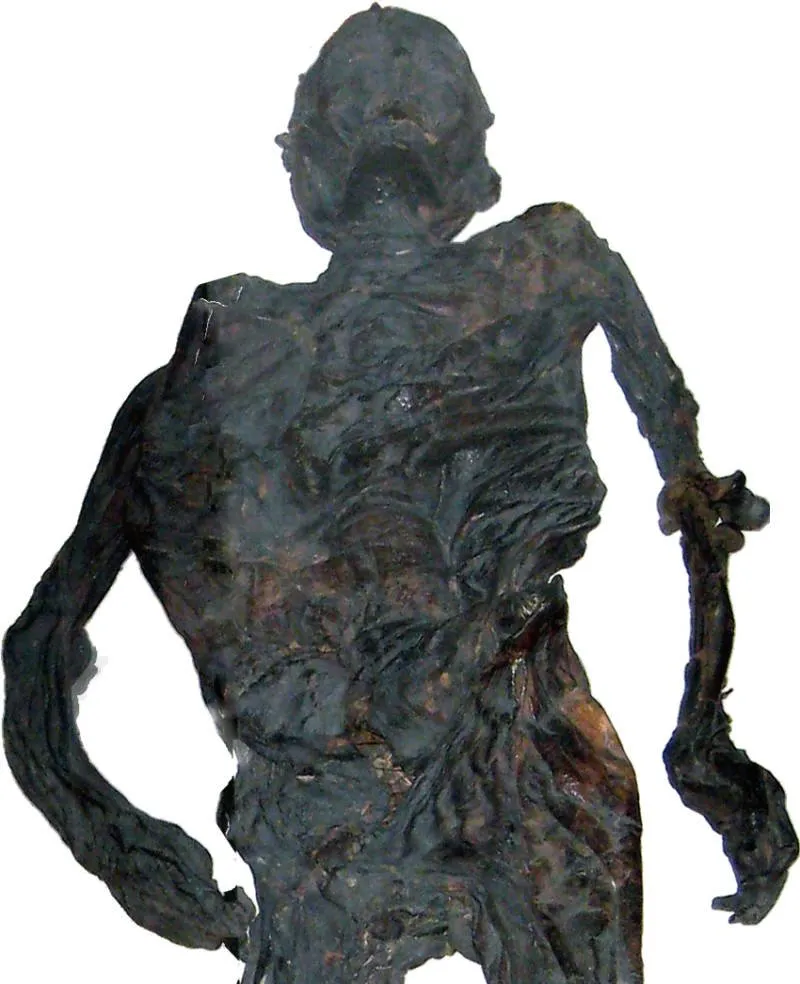
The Haraldskær Woman was discovered in a bog in Jutland, Denmark in 1892. When she was discovered, she was believed to be Queen Gunnhild of Norway, a quasi-historical figure from around 1000 CE who was said to have been drowned in a bog. Thinking it was their ancient queen, the Danish monarchy had the body placed in an elaborate glass-covered sarcophagus inside St. Nicolai Church in central Vejle, Denmark. In 1977, radiocarbon dating proved that the woman actually lived nearly 1,500 years before the revered queen, and likely died in the 5th century BC. She was around 40 years old at the time of her death. Credit: McLeod/Wikimedia Commons

The Haraldskær Woman in her glass-covered sarcophagus. Credit: Västgöten/Wikimedia Commons

The Kayhausen Boy was a child aged 7 to 10 years old who is thought to have been killed died between 300 and 400 BCE. He had an infected socket at the top of his femur that would likely have made him unable to walk. His killers bound his hands and feet with cloth torn from a fur cape and stabbed him four times. His body was discovered in a sphagnum bog in Lower Saxony, Germany in 1922. Credit: Department of Legal Medicine, Universitatsklinikum Hamburg-Eppendorf
Carved by someone in Ancient Egypt between 3700–3500 BCE.
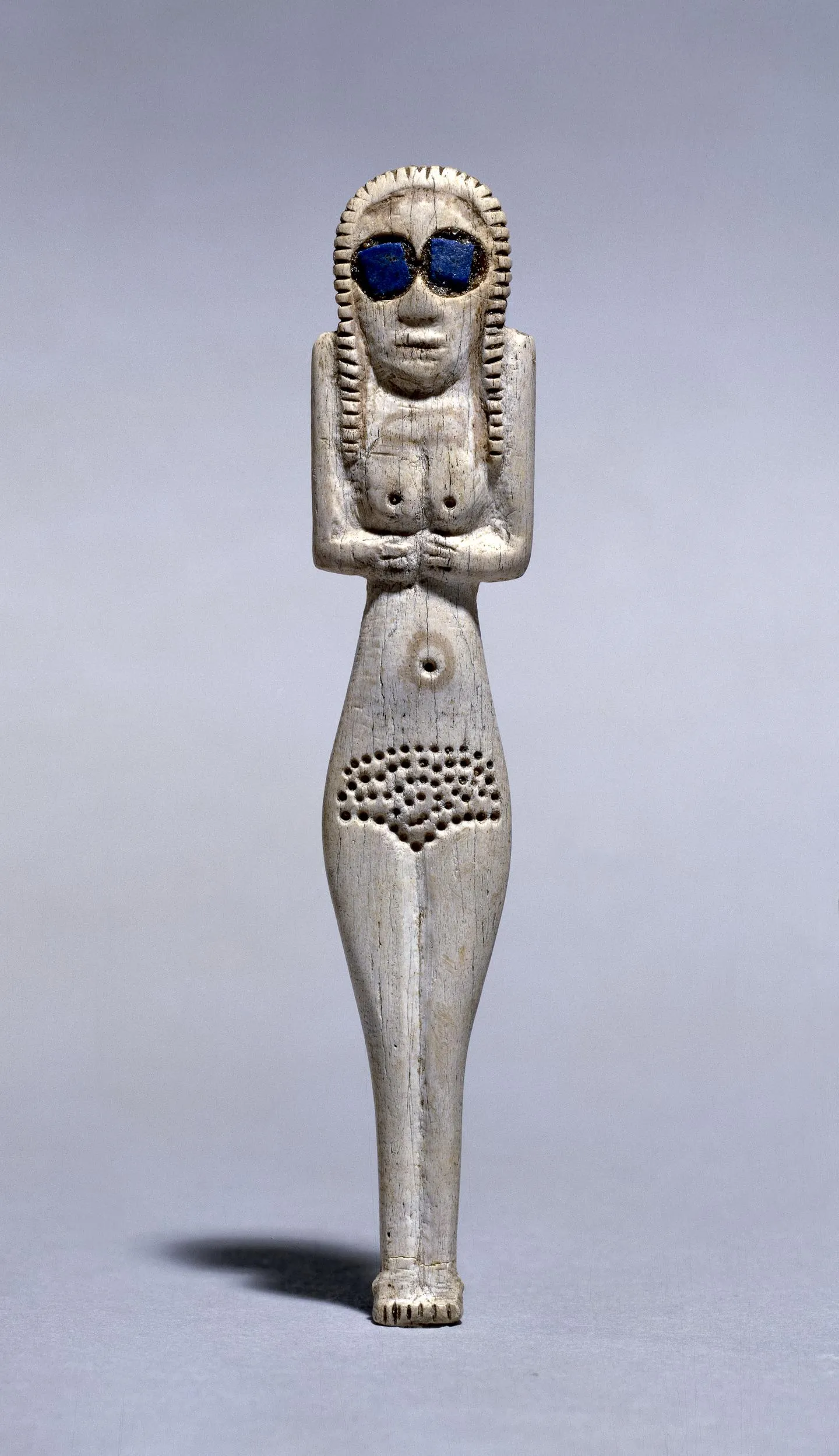
[…] most of them represent nude females with their feminine attributes emphasised by carving and careful drilling. With their slim figures, narrow waists and full hips they present an ideal of the female body that will change little over the course of Ancient Egyptian civilization. Their enduring concept of beauty also included a full head of hair (the bald ones may have had wigs) as well as large and alluring eyes.
Academy Award-winning Helen Hunt is a pharma-stunned alien who doesn’t enjoy any screentime in a disjointed plot that prioritizes misdirection over coherence.
Great cinematography. I loved the background score by William Arcane.
Once men turned their thinking over to machines in the hope that this would set them free. But that only permitted other men with machines to enslave them.
I can’t get enough of Gustav Nordgren’s art. Here’s a Mughal outpost. Not a high-enough resolution but tap/click for a larger image.

Zooming in!
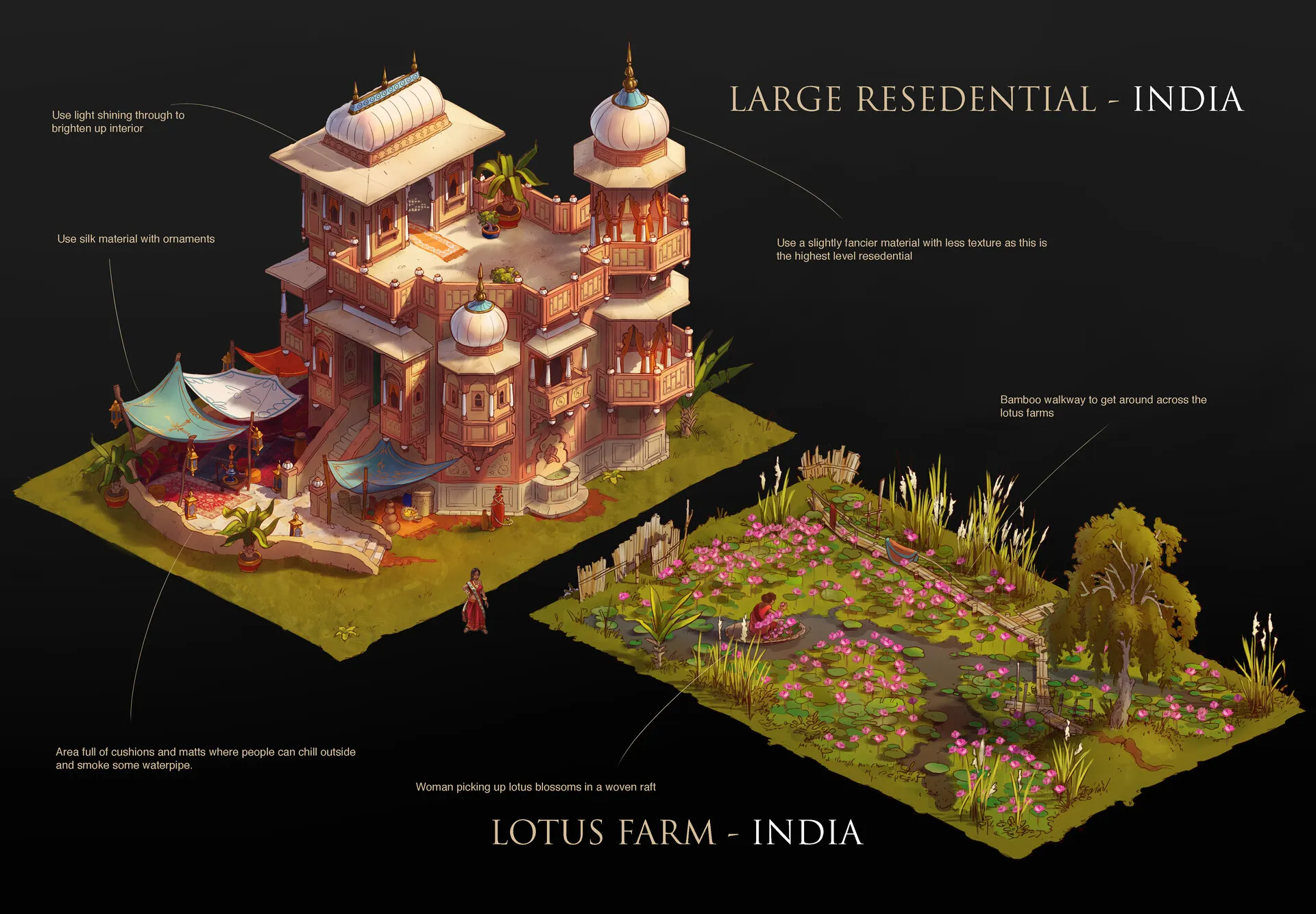



Here’s another. It’s Aztec!

Just beautiful stuff 😍
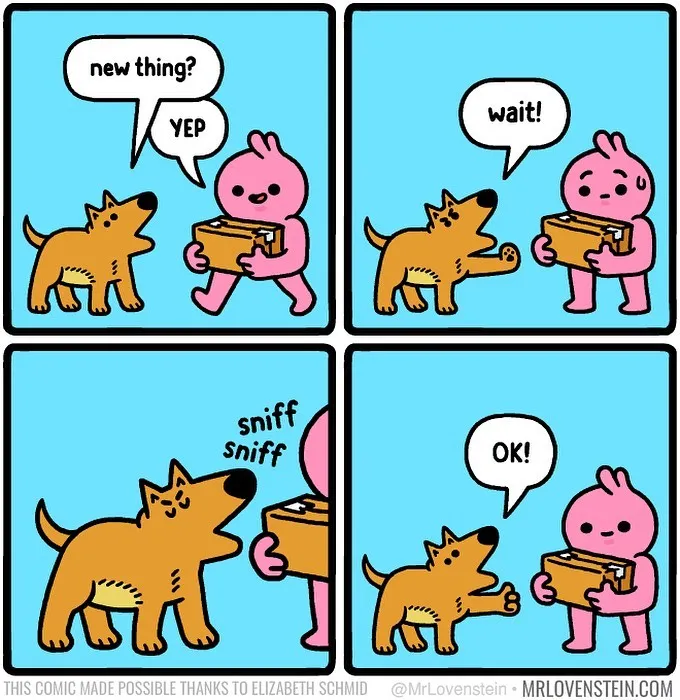
I will always let my puppy inspect everything for approval (and, usually, immediate loss of interest.)
Low resolution but enough to make the point.
See also: Every Website in 2019 and 2018. The mobile web is a garbage nightmare shitshow (especially if you want to read any fucking news.)
Here’s my dealership’s website on my phone.

Allysson Lucca is a Brazilian designer who took this original list (cached) of what the world would look like with a 1,000 people and shrank it to a hundred.
The idea of reducing the world’s population to a community of only 100 people is very useful and important. It makes us easily understand the differences in the world. There are many types of reports that use the Earth’s population reduced to 100 people, especially in the Internet. Ideas like this should be more often shared, especially nowadays when the world seems to be in need of dialogue and understanding among different cultures, in a way that it has never been before.
Transcribed from the graphic:
“If the world were a village of 1000 people.” This was written in 1990.
If the world were a village of 1000 people:
The people of the village would have considerable difficulty communicating:
In the village there would be:
Sixty of the thousand villagers would be over the age of 65.
Just under half of the married women would have access to and be using modern contraceptives.
Each year 28 babies would be born.
Each year 10 people would die, three of them for lack of food, one from cancer. Two of the deaths would be to babies born within the year.
One person in the village would be infected with the HIV virus; that person would most likely not yet have developed a full-blown case of AIDS.
With the 28 births and 10 deaths, the population of the village in the next year would be 1018. In this thousand-person community, 200 people would receive three-fourths of the income; another 200 would receive only 2% of the income. Only 70 people would own an automobile (some of them more than one automobile).
About one-third would not have access to clean, safe drinking water. Of the 670 adults in the village half would be illiterate. The village would have 6 acres of land per person, 6000 acres in all of which:
If the world were a village of 1000 persons, there would be five soldiers, seven teachers, one doctor. Of the village’s total annual expenditures of just over $3 million per year, $181,000 would go for weapons and warfare, $159,000 for education, $132,000 for health care.
The village would have buried beneath it enough explosive power in nuclear weapons to blow itself to smithereens many times over. These weapons would be under the control of just 100 of the people. The other 900 people would be watching them with deep anxiety, wondering whether the 100 can learn to get along together, and if they do, whether they might set off the weapons anyway through inattention or technical bungling, and if they ever decide to dismantle the weapons, where in the village they will dispose of the dangerous radioactive materials of which the weapons are made.
I’m put off by the word “gubernatorial” whenever I see it. Seems very silly, saccharine, like something a 5-year old mispronounced in 1953 that just stuck because it was so cute 🙄
Nope.
“Because, if you go back to where this word came from, in the original Latin, it’s from the verb, gubernare and gubernator, one who governs,” [Lisa McLendon, professor, University of Kansas School of Journalism] says.
Then, “governor, with the ‘v,’ came into English from French in about the 14th century,” she says. "French had taken the Latin and they swapped the ‘b’ for a ‘v.’ "
English speakers went back to the “b” about 400 years later, but just for gubernatorial. And, there’s the split.
This is indescribably badass.
It belongs to Tom Bosworth. I thought “I cannot even run that fast” and decided to look at the video.
While it certainly does look like they’re running, there are some severe restrictions on their movement, of course, else it’d be an event called ‘Trotting’. The rules are:
Judges look out any infractions by eye (no technology) and disqualify people appropriately.
When I was a kid, I’d close my eyes and allow the strange shapes caused by the night lamp and blood flow in my eyelids to put on a small dance and lull me to sleep. Many a time, as I’d relax and drift away, I would suddenly feel this ‘inflation’ and loss of personal boundary and sense of geometry. In one instance, I’d be the infinitely small nucleus of a sphere whose inner surface would race away very quickly from me. In another, I’d be viewing an animal (mostly elephants because I love them) or an object that would grow and warp very quickly in size and texture. I don’t know how to even express the rest. They should’ve sent a poet, etc. While most were very pleasant, a few would be horripilating enough where I’d have to open my eyes and situate myself to snap out of whatever was happening.
Finding out that you’re not the only weirdo who experiences (and likes) certain things is probably one of the greatest joys of the Internet. Just off this one thread on /r/meditation:
I sometimes get strong changes in my sense of physical size and location. These either pass as my concentration increases or they stick for a while. My head might feel very high up or large. My feet feel as if they’re below the floor or further behind me than they could possibly be. My whole sense of physical space can get warped and skewed so that even thoughts that arise about physical space seem to be confused, e.g. flattening 3D space into 2D or flattening everything into a line. It’s enough to be a distraction sometimes. (source)
Cool, this is the first time I’ve heard someone express a situation similar to mine. During a sit one time I kept inflating to the size of a massively obese man. The effect was so real I had to stop and open my eyes to make sure nothing bizarre was actually happening. (source)
Mhm, I’ve had that too. It felt like I was turing into the marshmellow man from ghostbusters. (source)
What I felt as a child is common and normal in children, and in adults who are red-belts at meditation. It’s a level of jhana (that’s a Pali word, dhyana is its Sanskrit twin), one of the two forms of meditation in Theravada Buddhism (vipassana being the other.)
Jhana has eight levels of practice “first codified by Buddhists over 2,000 years ago.” I’m going to smush this article (“A”) and this Britannica entry (“B”) into a quick description of each.
A - When internal concentration is strong enough, J1 is entered, accompanied by strong physical pleasure—“better than sexual orgasm” ([9] p.151)—and greatly reduced vigilance with smaller startle responses[…]
B - Initially, the Theravadin meditator seeks to achieve detachment from sensual desires and impure states of mind through reflection and to enter a state of satisfaction and joy.
A - In J2 joy “permeates every part of the body,” but with less physical pleasure. | In the second stage […], intellectual activity gives way to a complete inner serenity; the mind is in a state of “one-pointedness” (concentration), joy, and pleasantness.
B - In the second stage of this form of meditation, intellectual activity gives way to a complete inner serenity; the mind is in a state of “one-pointedness” (concentration), joy, and pleasantness.
A - In J3, the character of joy changes to “deep contentment and serenity.”
B - In the third stage, every emotion, including joy, has disappeared, and the meditator is left indifferent to everything.
A - J4 is described by “equanimity—a profound peace and stillness.”
B - In the fourth stage, satisfaction, any inclination to a good or bad state of mind, pain, and serenity are left behind, and the meditator enters a state of supreme purity, indifference, and pure consciousness.
A - The higher-numbered jhanas J5–J8 are characterized by more subtle and profound perceptions […] Each jhana is reported to be deeper and more remote from external stimuli than the last
B - The dhyanas are followed by four further spiritual exercises, the samapatti-s (“attainments”):
So there 🙏🧘♀️📿
Don Gorske started eating them in 1972 and continues to do so. He will buy 6-8 at a time twice a week (at the same McDonald’s franchise) to save on gas. He’s kept all boxes and receipts, which I suppose are what you’d need to apply for and maintain a Guinness Record.
Emphasis mine:
Seriously, if you have five minutes, give the whole video a watch. Even if the idea of eating Big Macs every day isn’t for you, there’s something to be said for Gorske’s power of persistence and the joy he finds not only in his routine but in being himself. Sure, it’s not necessarily the noblest of records, but at a time when people are winning medals for artistic swimming and table tennis, who’s really to say which feats are more notable than others?
Two things:
Lovely Python-esque stuff.
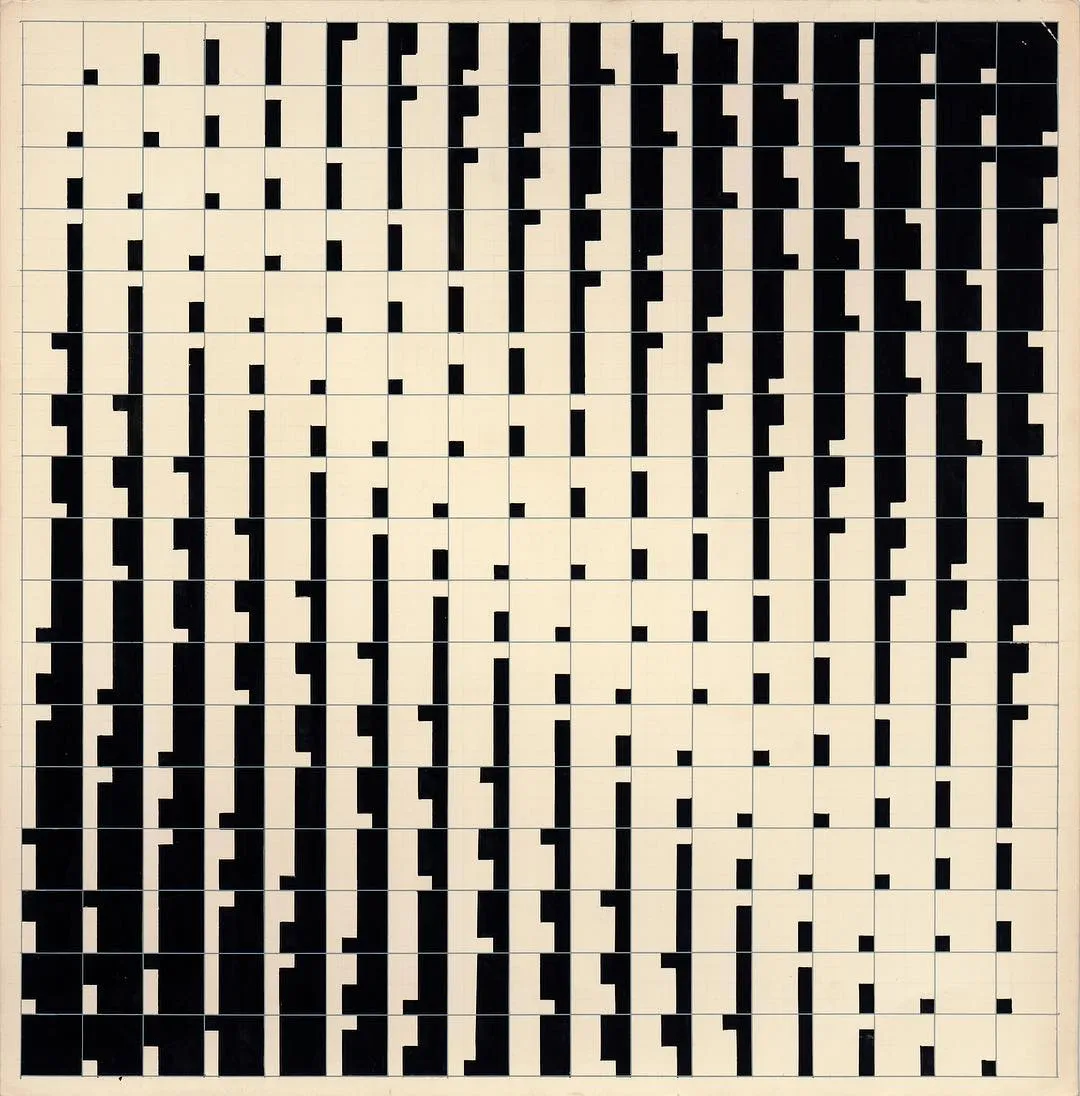
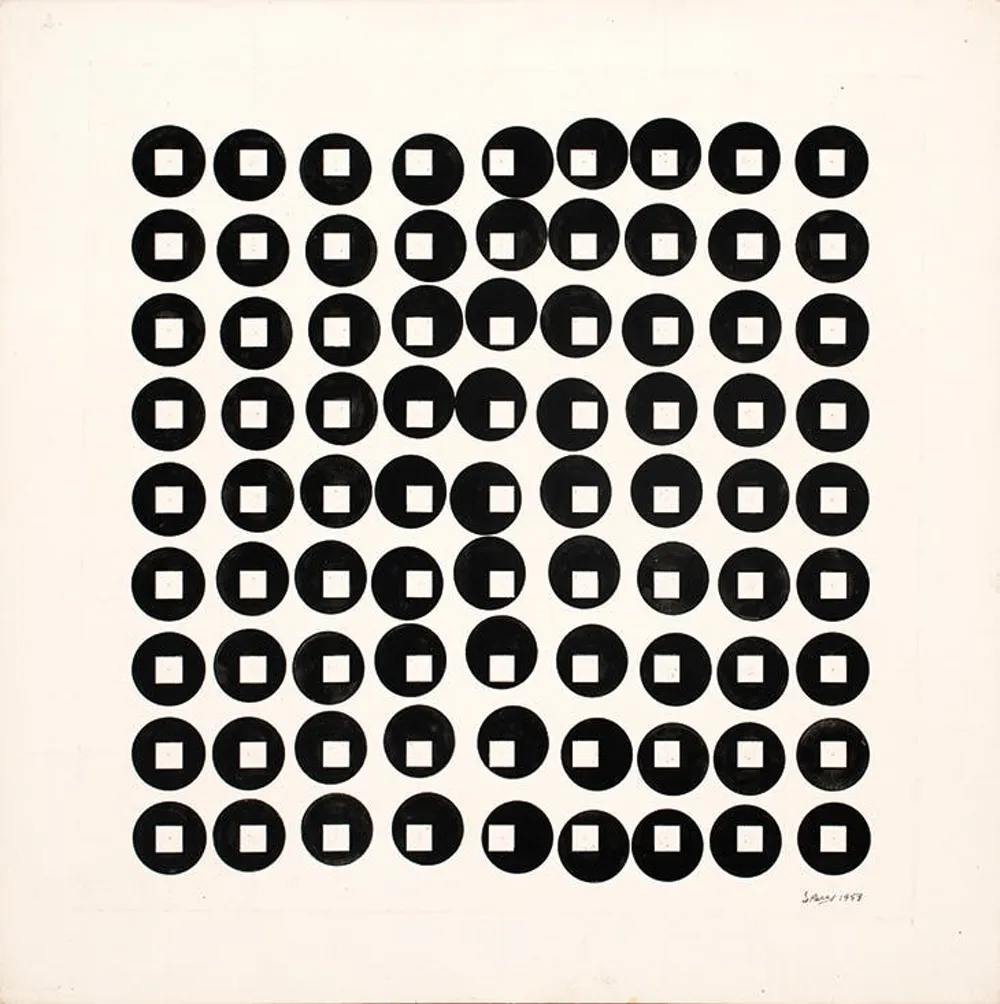
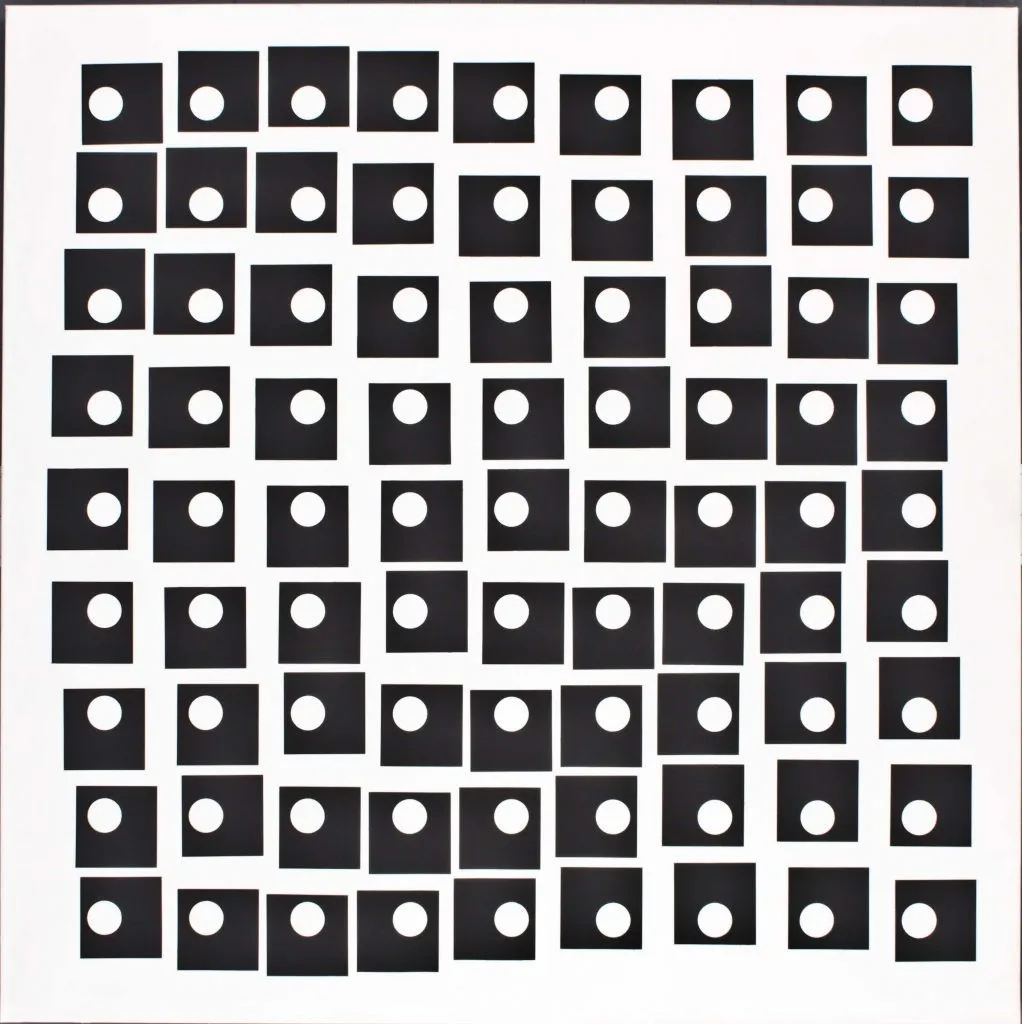
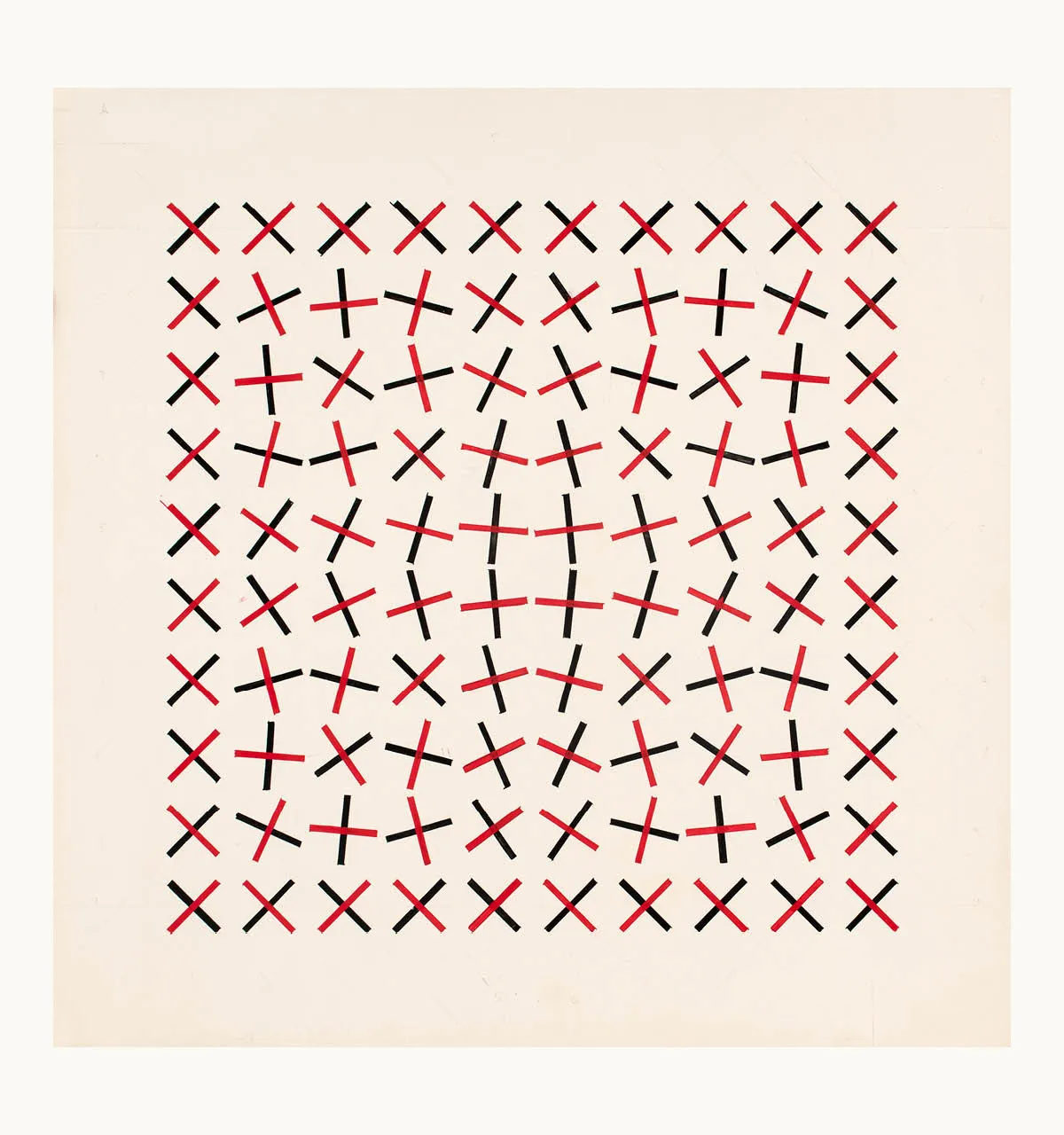
I love these etudes by Professor Yun Shin. I saw them at the Des Moines Art Center a few years ago.

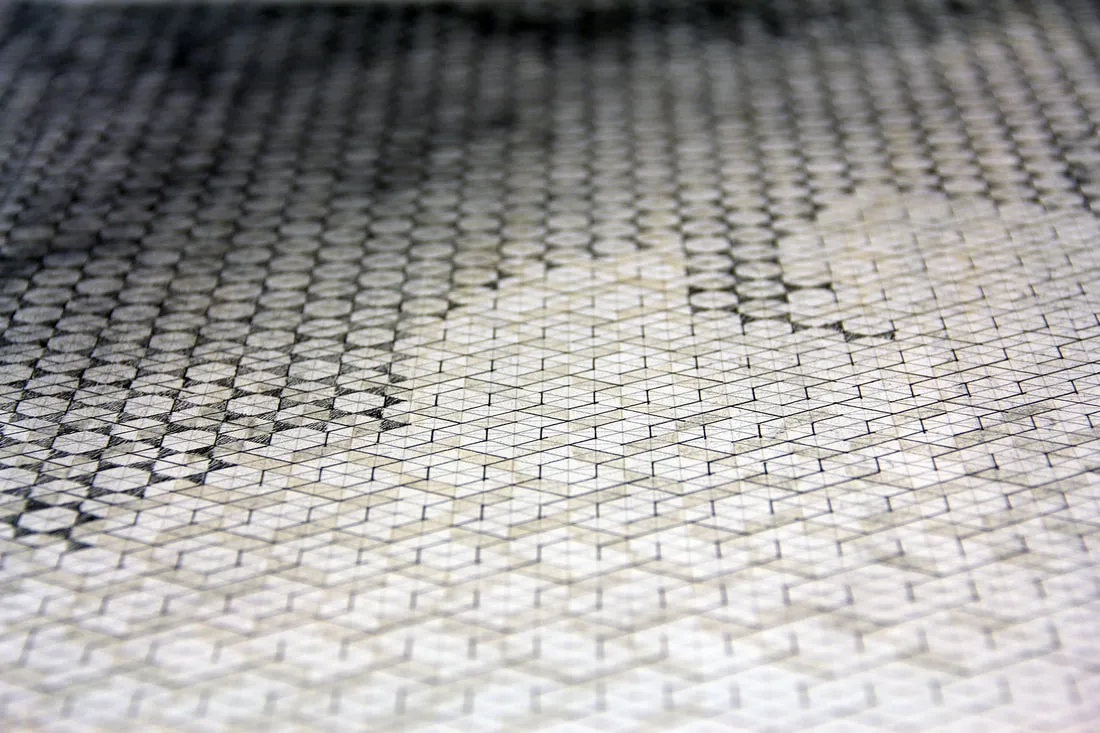

All images © the artist
A God descends into Hell to slay its demons on a whim. Squint hard enough and you might even find some compassion in his caprice and ruthlessness. Just a beautiful movie.
There isn’t much variety in the music I listen to. I stick to soundtracks, minimalist composers, some weird surprises1, and mostly to what my good friend calls “electronic windchime shit” (by which he means “ambient music.”)
This means I’ve heard fewer than, say, twenty country songs in my life so far (aside from Dolly Parton ♥️) And this the country-est of them all.
I suppose it’s nice that the boffins behind YouTube think I need a change of pace 🎣
I will listen to things if the album art looks interesting.↩︎
She addresses graduate/PhD students struggling to complete their theses but there’s quite a bit to learn here. She considers procrastination as a perfectly logical response: why wouldn’t one seek pleasure? It’s something that (a) reveals a lot about what you’re afraid of and (b) is hence a protection response.
Other notes, thoughts, etc:
Over the past year, I’ve been amazed by how much mindfulness comes up with almost every conversation I have (or book I read or podcast I listen to) about self improvement and Joy in Life.
Update
Was reading an article on the efficacy of todo lists and lo!
Something about the future defeats our imaginative capacity. “Present self screws over future self,” says Tim Pychyl, a psychologist at Carleton University who studies procrastination. He says that we regard our future self as a stranger, someone onto whose lap we can dump tons of work. On some weird level, we don’t get that it’ll be us doing it.
One of Pychyl’s students recently tried a clever experimental trick to get people to procrastinate less. The student took undergraduates through a guided meditation exercise in which they envisioned themselves at the end of the term—meeting that future self. “Lo and behold,” Pychyl says, those people “developed more empathy for their future self, and that was related to a decrease in procrastination.” They realized that time wasn’t infinite. Future them was no longer a stranger but someone to be protected. To get us off our butts, it seems, we need to grapple with the finite nature of our time on Earth.
It’s the same deal as with weight loss: you will lose weight if your kitchen only contains healthy and low-sugar food.↩︎

I used to have a printout of this at my desk at work because it’s just pure joy 🌸 ♥️
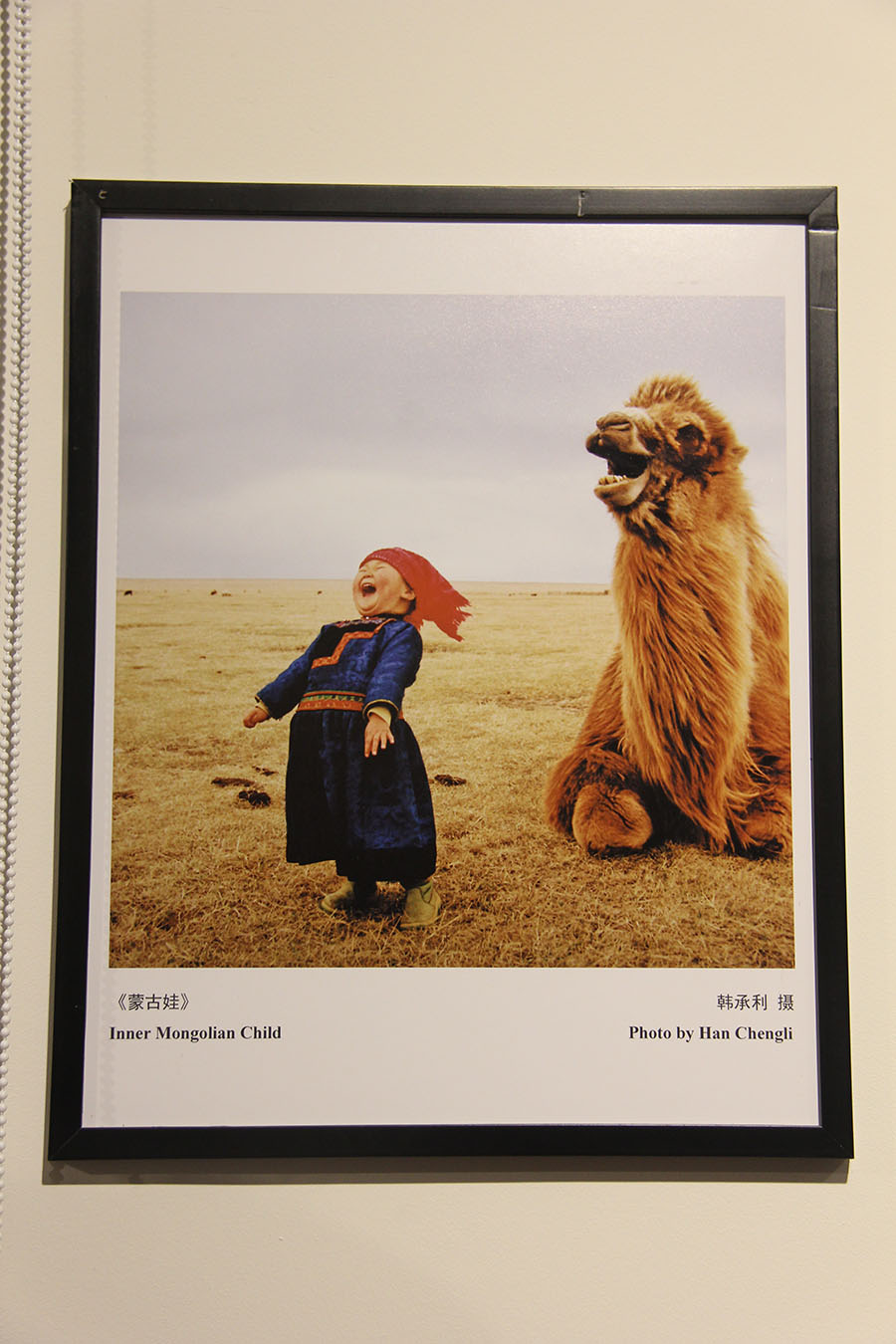
It was pretty popular on the internet a while ago. The little girl’s name is Butedmaa and she was just 5 when this picture was taken in 2003 by photographer Han Chengli, who titled it “Inner Mongolian Child”. Here’s another of her with her family in 2014.
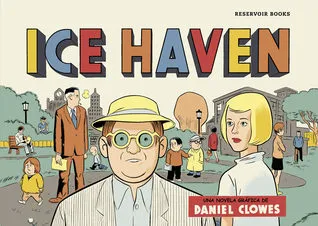
Birthday gift from TK. Sharp, vibrant, funny, and dark. The characters’ philosophical ruminations are self-indulgent and sophomoric and tedious. Don’t know if that was the point.

Glass Octopus (Vitreledonella richardi)

Longarm Octopus larva (Macrotritopus defilippi)

Marine Snail (Atlanta inclinata)
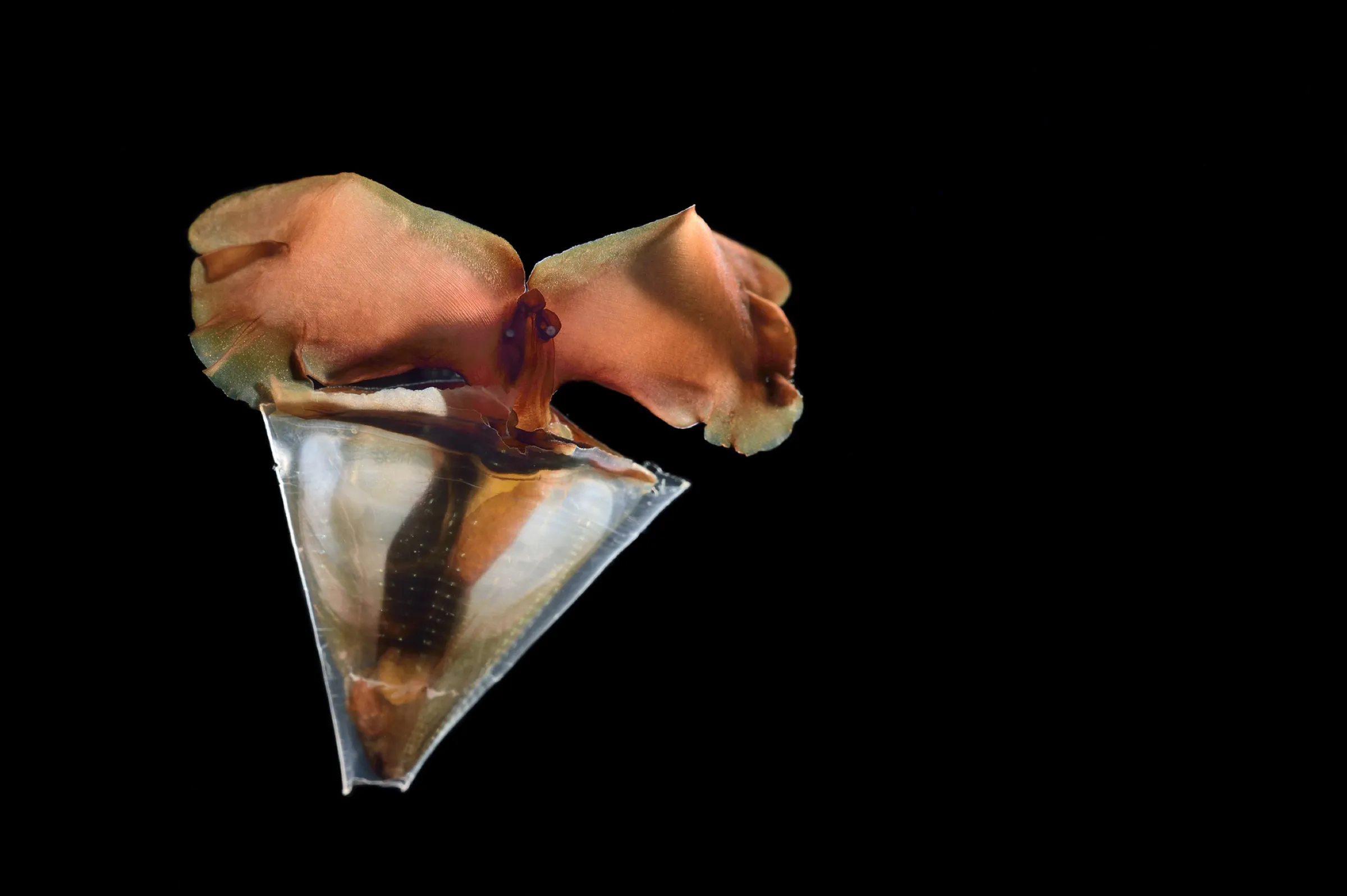
Sea Butterfly (Clio chaptali)

Eye-flash Squid (Abralia veranyi)

Deep sea eel
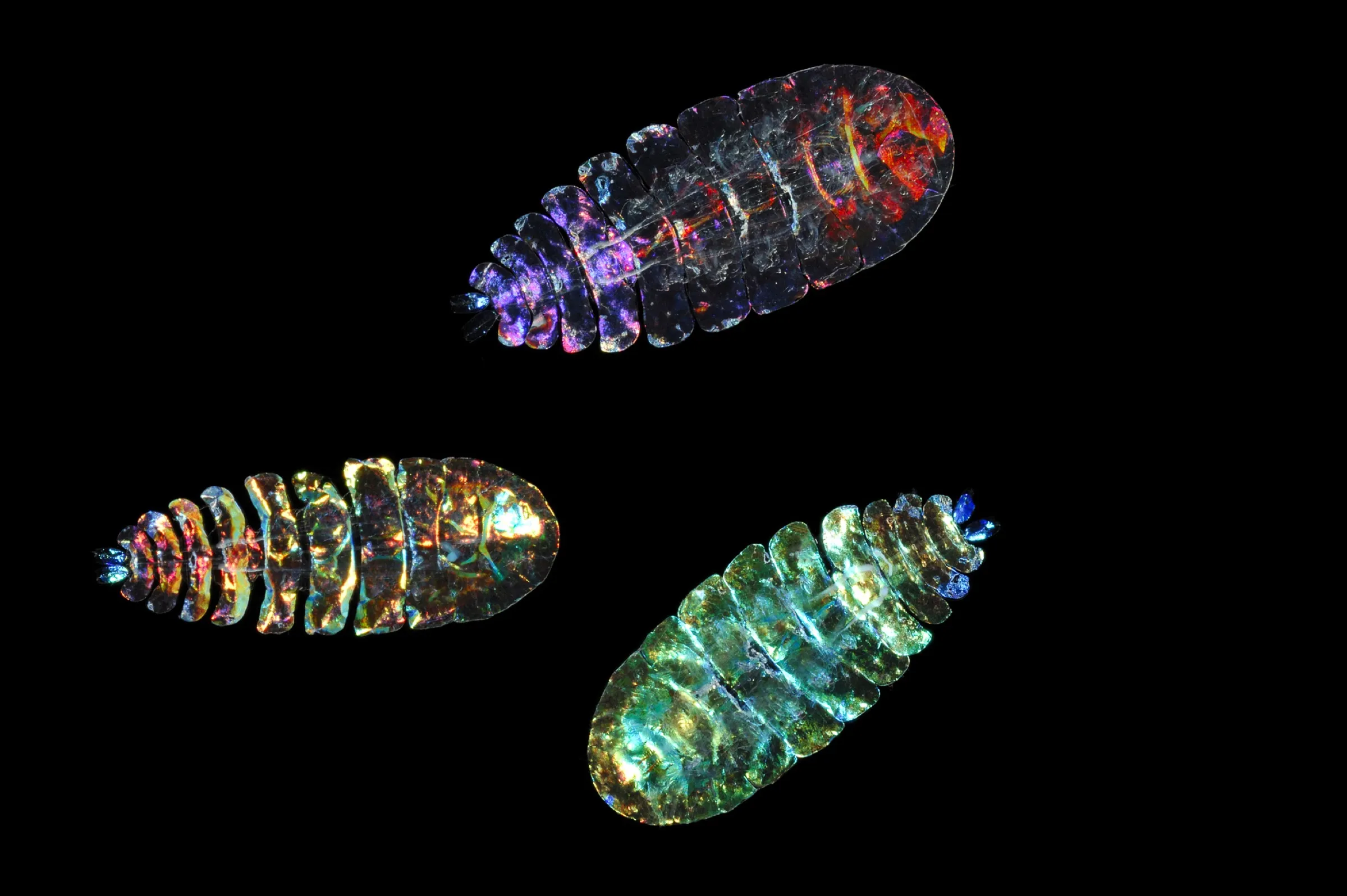
Male copepods

Larval Prawn (Plesiopenaeus armatus)

Glass Squid (Bathothauma lyromma)
The entire infotainment system is a HTML 5 super computer,” Milton said. “That’s the standard language for computer programmers around the world, so using it let’s [sic] us build our own chips. And HTML 5 is very secure. Every component is linked on the data network, all speaking the same language. It’s not a bunch of separate systems that somehow still manage to communicate.
Note that the company still had a market cap of $5B at the time of this writing.
I can die, they can do my picture. I have 84 years, but I am still creating. All my life I create, and is more and more and more.
The mind is like a universe. It’s constantly expanding. Like the universe, exactly like the universe, open the mind. The opening of the mind is every day, is open. That was this picture. Open the mind of all the persons who worked there. From the producer to the artists. From the workers… for every one was an opening of the mind, this work.
Was ambitious, but not too ambitious. Myself, I have the ambition to live 300 years. I will not live 300 years. Maybe I will live one year more. But I have the ambition. Why you will not have ambition? Why? Have the greatest ambition possible. You want to be immortal? Fight to be immortal. Do it. You want to make the most fantastic art of movie? Try. If you fail, is not important. We need to try.
Watched with LD. What an incredible story. His vision would’ve strayed a bit far from the book but what a wonderful thing it would’ve been to experience.
I am going to read The Incal posthaste. It’s a set of highly regarded graphic novels by Jodorowsky and Moebius. I’m told it’s a heavily copied work too. Lovely stuff. Never give up.
“Garlic is divine. Few food items can taste so many distinct ways, handled correctly. Misuse of garlic is a crime. Old garlic, burnt garlic, garlic cut too long ago and garlic that has been tragically smashed through one of those abominations, the garlic press, are all disgusting. Please treat your garlic with respect. Sliver it for pasta, like you saw in Goodfellas; don’t burn it. Smash it, with the flat of your knife blade if you like, but don’t put it through a press. I don’t know what that junk is that squeezes out the end of those things, but it ain’t garlic. And try roasting garlic. It gets mellower and sweeter if you roast it whole, still on the clove, to be squeezed out later when it’s soft and brown. Nothing will permeate your food more irrevocably and irreparably than burnt or rancid garlic. Avoid at all costs that vile spew you see rotting in oil in screw-top jars. Too lazy to peel fresh? You don’t deserve to eat garlic.”
If this resonates with you, you might love Sri Lankan Garlic Curry
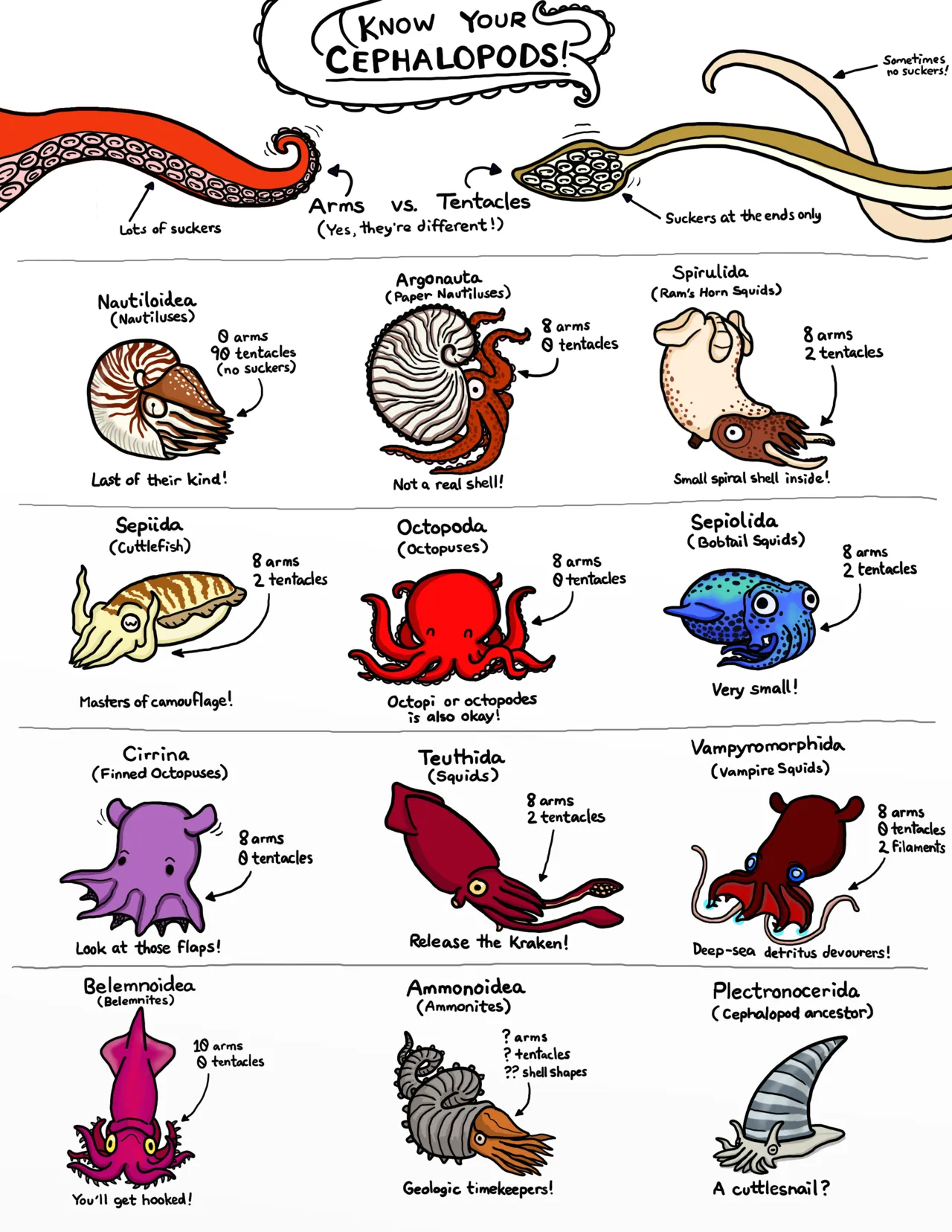
(Source unknown)
TIL that (a) tentacles and arms are two different things and (b) there is a lot more diversity to this family1 than I’d imagined!
I don’t mean “family” in a taxonomic sense.↩︎

This beautiful piece was sculpted in Japan around the 13th century and is about three feet tall. The subject is a Zen Buddhist monk Shinchi Kakushin, who lived till the ripe old age of 95. After his death, he was given the title “perfectly awakened national teacher of the Dharma lamp” which is what “Hotto Enmyo Kokushi” means.
It’s at the Cleveland Museum of art. More info here.
The key takeaways in no particular order.
<noscript>. If you are using it, use it a lot more.I’m omitting CDN uptime (can’t do anything about this) and Browser compatibility (supporting 5+ year-old browsers is not something I care about doing given the work I do.)
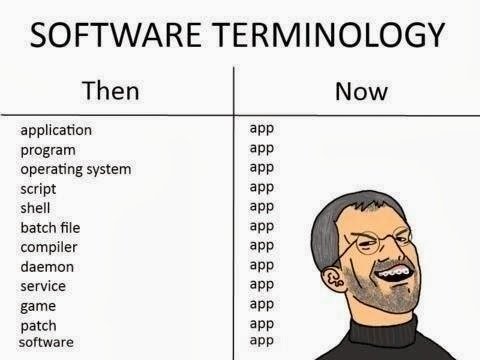
Finally, not every fucking thing needs to be an App. For instance, your Terms of Service page can actually be a document on the Internet 😱
And not just the ones you install. I know of situations where a Chrome plugin was mandated by Corporate IT security (not my current employer.)↩︎
by Ned Gulley at Star Chamber from a long, long while ago.
If you’ve ever installed a program using “
curl XYZ | sh” don’t worry about what’s in the vaccine
♥️♥️♥️
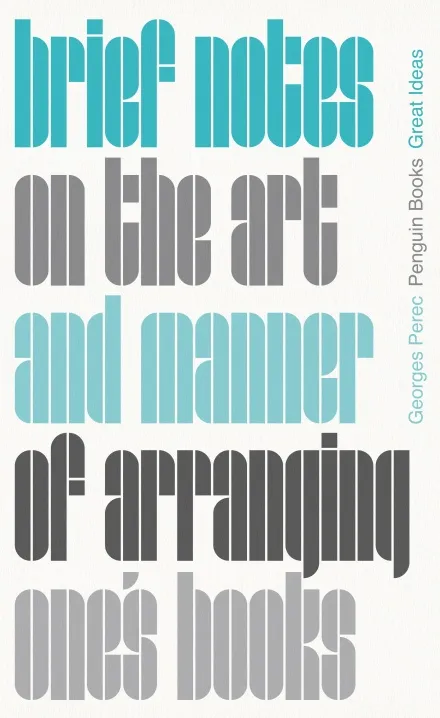
I remember complaining about having too many books to read at The Mill (RIP) in Iowa City, and getting a weary “We know” to my “Did you know the Japanese have a word for this?”
I remember telling them I’d resolved to have no more than, say, a hundred books on my shelves at any given time, and them telling me about an essay (or at least I think it’s an essay) in this book.
I’ve never come by anything by him before. Reading him is like watching a bee bob and weave and float around and maybe find nectar and maybe not but just be and have fun. Words1 and ideas, lists and taxonomies: It’s a lot of sincere and majestic whimsy.
Even if Georges Perec had not written a novel without the letter “E”—“La disparition,” later rendered into “E”-less English as “A Void”—he would still be one of the most unusual writers of the twentieth century. Among his works are a treatise on the board game Go, a radio play about a machine that analyzes poetry, an autobiography cast in the form of a novel about a city of athletes, an approximately twelve-hundred-word palindrome, a crypto-Marxist anatomy of consumerist Paris, a scrupulously researched history of a wholly fictional painting, a deeply eccentric bucket list (“buy a number of domestic appliances” and “travel by submarine” are among the entries), a memoir composed of four hundred and eighty stand-alone sentences that all begin “I remember,” a novella in which the only vowel used is “E,” a lyric study of Ellis Island, and, from 1976 until his death from cancer, in 1982, a weekly crossword puzzle for the newspaper Le Point. It would be hard to disagree with Italo Calvino that Perec “bears absolutely no resemblance to anyone else,” or with Perec himself, who said, in an interview a few years before his death, that he had never written the same thing twice.
Translated from French but still.↩︎
I bought this print at a thrift store a decade ago because it looked ‘nice’ and warm and I loved the colors. It’s an innocent celebration at a glance and from a distance, and a total bacchanal when you examine its scenes up close.
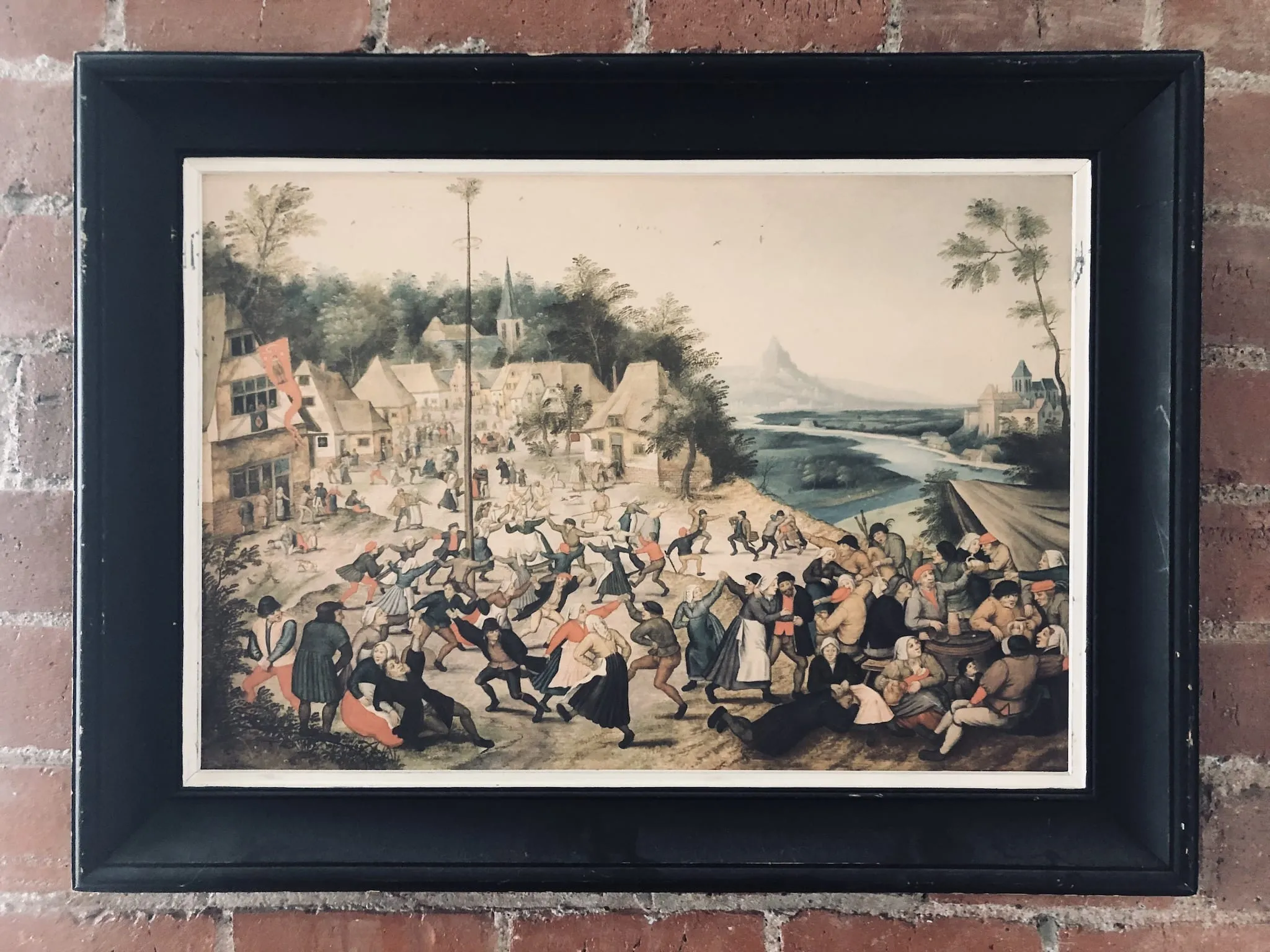
I never knew who painted it until now. It’s Pieter Bruegel the Elder (not to be confused with the Younger) who “was the most significant artist of Dutch and Flemish Renaissance painting, a painter and printmaker from Brabant, known for his landscapes and peasant scenes (so called genre painting); he was a pioneer in making both types of subject the focus in large paintings.” (Source.) I’m glad that’s settled.
The point is, some products are sold directly to the end user, and are forced to prioritize usability. Other products are sold to an intermediary whose concerns are typically different from the user’s needs. Such products don’t HAVE to end up as unusable garbage, but usually do.
Jira and Confluence, which I use at work, come to mind as formerly amazing products which have gone down the shitter with unnecessary Enterprise™ feature-bloat over the past few years. I wonder if there’s a way out of this mire (maybe start saying “No”?) Until then, #jobsecurity I guess.
My university just announced that it’s dumping Blackboard, and there was much rejoicing. Why is Blackboard universally reviled? There’s a standard story of why “enterprise software” sucks. If you’ll bear with me, I think this is best appreciated by talking about… baby clothes!
There are two types of baby outfits. The first is targeted at people buying gifts. It’s irresistible on the rack. It has no fewer than 18 buttons. At least 3 people are needed to get a screaming baby into it. It’s worn once, so you can send a photo to the gifter, then discarded.
Other baby outfits are meant for parents. They’re marked “Easy On, Easy Off” or some such, and they really mean it. Zippers aren’t easy enough so they fasten using MAGNETS. A busy parent (i.e. a parent) can change an outfit in 5 seconds, one handed, before rushing to work.
The point is, some products are sold directly to the end user, and are forced to prioritize usability. Other products are sold to an intermediary whose concerns are typically different from the user’s needs. Such products don’t HAVE to end up as unusable garbage, but usually do.
OK, back to Blackboard! It’s actually designed to look extremely attractive to the administrators (not professors and definitely not students) who make purchase decisions. Since they can’t easily test usability, they instead make comparisons based on… checklists of features. 🤦🏽♂️
And that’s exactly what’s wrong with Blackboard. It has every feature ever dreamed up. But like anything designed by a committee, the interface is incoherent and any task requires at least fifteen clicks (and that’s if you even remember the correct sequence the first time).
Software companies can be breathtakingly clueless when there’s a layer of indirection between them and their users. Everyone who’s suffered through Blackboard will have the same reaction to this: try having less functionality! edscoop.com/how-canvas-cam…
The grumbling about Blackboard has finally gotten loud enough that schools are paying a modicum of attention to usability when evaluating alternatives. Blackboard’s market share has dropped dramatically and this will probably continue. Good.
Here’s the kicker, though. It’s extremely likely that whichever vendor emerges on top will fall into the same trap. The incentives almost guarantee it. Once profs and students put down the pitchforks, committees will go back to their checklists, and feature creep will resume.
Blackboard is 20 years old. If Twitter is around in 20 years, let’s see how this prediction holds up. And now I have to go rescue a three-month old from an extremely cute and equally uncomfortable outfit.
Simply delightful. Here’s an article about him.
I have a dying peace lily. I’m a bit attached to it and don’t know that I’ll be able to save it. Searching the internet for any hope led me to this post (cached) which made me feel slightly better about my inexperience.
The first mistake is relying upon the plant’s visual cue that needs water: the leaves droop. But, as the post notes, this can happen when they’re both over and under-watered!
[…] This would be a good indicator of when to water, except that by the time things reach the point of laying flat, damage has been done: the roots die back slightly each time this happens, and if it happens often enough, it will eventually fail to come back at all.
[…] it’s difficult to get the watering just right. […] If it’s too wet, there’s a tendency for plants to rot where they sit, except that they do it in such a way that you don’t necessarily realize what’s going on. One day you go to pull off a dead leaf, and a whole rootless plant comes out. This will generally not be salvageable. To make things trickier, the plant (like a lot of other plants) responds to being too wet by – you guessed it – drooping, which would make an inexperienced grower think that it needs more water.
I think I ruined mine by transferring it to a larger pot, thinking I was ‘suffocating’ it in a smaller one.
However, it’s been my experience that, nine times out of ten, a peace lily with black leaf edges is suffering from root suffocation, either because its soil has broken down and compacted, or because part of the soil never gets to dry out. Especially in a very large pot, and especially especially in a plant that’s been overpotted (put in a pot that’s too large for the plant), and especially especially especially in a plant that’s in a very large pot, too big for the plant, with no drainage hole, the top of the soil can dry out while everything after the top three inches is soaking wet.
Contrary to marketing material, they are not easy beginner plants:
In the time I’ve been at Garden Web (since Dec. 2006), I’ve seen more people post about issues with their peace lilies than any other plant, no contest: too many marketers think that the only important thing about a plant is how much light it needs. It’s true that Spathiphyllum doesn’t require a lot of light; that doesn’t make it the best plant for you, any more than knowing Jennifer Anniston’s name makes her your best friend.
So what does one do?
Common sense is important. If your plant is droopy and the soil feels wet, the plant is obviously not drooping because it’s too dry: don’t give it water. If the plant looks fine and the soil feels dry, the plant doesn’t need water just because the soil is dry: wait for the leaves to get a little limp first. Spathiphyllums are nothing if not good communicators.
And don’t worry about humidity. And use progressively larger pots. I think mine is too far gone at this point 😔
Not sure why this actually got to me.
From an interview with Vincent Connare, creator of Comic Sans:
Q. What do you think of comic sans’ detractors?
A. I think most of them secretly like Comic Sans — or at least wish they had made it. Interesting fact: the main designer at Twitter tweeted that the most server space is used by complaints about: first, airlines; second, Comic Sans; and third, Justin Bieber. So not even The Bieber can beat Comic Sans!
Here’s the tweet he’s talking about (it’s from 2010.) Also:
Regular people who are not typographers or graphic designers choose Comic Sans because they like it, it’s as simple as that. Comic Sans isn’t complicated, it isn’t sophisticated, it isn’t the same old text typeface like in a newspaper. It’s just fun — and that ‘s why people like it.
I tend to ignore gatekeeping bullshit when it comes my typographical loves 😛 And from that NYTimes article, emphasis mine:
“It’s like, ‘Not only am I going to refuse to submit these documents, but I’m going to use a typeface that doesn’t submit to the solemnity of the law, and Congress and public institutions,” said Michael Bierut, a partner at the design firm Pentagram. “Or maybe he just likes Comic Sans. It’s hard to say. Few typefaces are this freighted with public opinion.”
I think these are the final words on the matter from the creator himself:
If you love Comic Sans you don’t know much about typography. And if you hate Comic Sans you need a new hobby.
Once a year, I spend $75 on a good bottle of Scotch Whisky and bring it to Karla’s birthday party. Last year, I brought Talliskers; this year, I brought Cragganmore. I break open the bottle, and ask everyone to take a taste. In this way, we can slowly get an idea of the difference between the various kinds of whiskies. And so it came to pass that I was sitting there with Nate and Genevieve, snobbing it up.
“It’s not as peaty as the Talliskers,” Nate noted, sipping the Cragganmore with relish.
“And it has a really quick drop off the back end,” Geneveive sighed, swishing it around in his mouth.
Bill was standing there, looking confused and envious. “I don’t taste any of that,” he said, looking down in his glass as though he might be able to see the peat if he squinted hard enough. “I don’t have a really good palate. You guys all taste these zillions of things, but I don’t get anything.”
“Who says we do?” I asked. “We could be faking it. It’s really easy, and you can look all cultured without tasting a damn thing. Want me to show you how?”
Stick your nose into the glass. Sniff deeply, then close your eyes as though you’re processing a lot of things simultaneously. Even if you smell nothing, act as though this drink is a cornucopia of sensations and you’re sorting through all of them.
Do not speak. Scent is pretty easy to verify, so if you guess wrong then everyone will know what a yutz you are. If someone ventures their own review as to what it smells like, frown as though you’re too busy concentrating on this intense bouquet to interrupt it with stupid words. This automatically gives you the edge, since as a conneisseur you know enough not to discuss anything until the full tasting is over.
Take a mid-sized sip, then roll it around in your mouth. Don’t swish - that’s for chumps - but kind of splash it around on your tongue.
Then - and this is the most important part - hold the glass away from you at an angle. Freeze as though your entire body is concentrated upon analyzing this taste in your mouth. Narrow your eyes and look upwards as you pretend to process this beverage, taking your time as you give every impression of savoring the flavor.
After a minute, bob your head just a little, as though coming to a conclusion.
Swallow it and then open your mouth, breathing in. Some people claim they can feel the drink mutate upon their palate as the air rushes over their tongue; they are liars, but convincing ones. And now you can be one of them.
Nod again.
Now, to understand how to be a proper snob, you must understand two things about taste:
The first point is easy; you don’t taste everything all at once. There’s actually a rise and flow to the taste process, starting from when the food touches your tongue, building to the intense mid-section, and then dropping off into an aftertaste. In the case of a McDonald’s hamburger, what you’d taste first would be the squishiness of the bread and the oversalted burger, rising to the chewy dog food of the burger itself as you mash it around, ending with that greasy oil slick that coats your throat at the end.
You may never experience this yourself, but trust me when I say that it does happen. You just gulped some whisky, but the foodies experienced a three-act play in their tastebuds. So you must be aware of this flow.
The second part involves understanding that taste is an intensely personal experience, which is to say that you can say pretty much anything and nobody knows any better. In fact, unless you’re drinking with a sommelier who knows what she’s doing - in which case let her tell you what’s in it and nod a lot - then everyone is afraid that maybe they’re the ones who don’t know what they’re doing.
If you say, “I taste a faint hint of paprika,” they don’t go, “Wow, what a liar” - they become paranoid because they don’t taste it. Maybe you’re the guy with the super taste buds who catches everything. There they are, sipping this drink and only getting a third of its full bouquet, and if they really had the genetics to appreciate it the way that you do they would taste paprika.
You can say anything. You think people taste oak in a wine? Fuck no. Who the hell eats oak? These fuckers want you to think they’re walking around taking bites out of dogwood trees so they can tell what kind of barrel the wine came from - they’re awful, awful fakers. And if they can tell you what country the oak came from, the first note you should mark in their aroma is a seething, overwhelming bullshit.
So fake away! But there are guidelines.
First, if you’re faking it, everything is faint - you want to talk in terms of hints, notes, and shades. Give the impression that you only barely caught this delicate wisp of a flavor because you were concentrating so intensely back in Step 2. You want to let them tell you what the overwhelming taste of the drink is; it’s your job to bat clean-up and talk about shit they might have missed.
Second, some flavors are better than others. Paprika is actually a bad example, since that’s a spice. Generally, you want to only talk about flowers and fruits, with maybe some hints of leafy spices when you want to show off. (“Mint” is bad, but “oregano” can be gotten away with if you’re an expert.) The only exception is beer, where you want to talk about breads and chocolate flavors; starches are good for beers.
And remember: natural is better than fake.
GOOD: “I taste a hint of blackberry.”
BAD: “The tang of Fruit Roll-Ups.”
So pick a taste, and pick a place - which is to say it’s at the beginning or the end of the curve. (You never want to taste anything in the middle, where the intense flavors are. Remember, you’re picking up the transmissions from Alpha Tau.)
When in doubt, go with blackberry. It shows up everywhere.
When you speak, speak slowly, as though you’re coming to a conclusion. Then break out with it.
“I taste a hint of blackberry just at the finish.”
Either people will agree with you, or they won’t. If they agree with you, great! They don’t taste shit, either. You can now tell them you’re catching a splash of Strawberry Go-Gurt in the fourth and down, and they’ll just nod and stare. You have bolloxed a bunch of clueless snobs; take a bow!
If they don’t agree, then frown a little. They won’t ever say, “Bullshit! You fucker!” Instead, they’ll say, “Really? I don’t taste that…”
Stick to your guns. You caught it. Take another sip as though to confirm, repeat the process and say, “No. Still there for me. Not for you, though?” Then laugh about how weird taste is, that some folks catch things that others do. Then spend the rest of the evening nodding and agreeing with the other snobs, only occasionally venturing a guess, because if you spend the entire evening contradicting them then the game is up.
And that’s it! By the end of the evening, Bill had learned his lessons, and now he can stare quietly at the ceiling and then talk about the bouquet along with the rest of us awful, awful liars.
Now you, too, can fake anyone out. Remember: use this power only for good, never evil. Or to get laid, whichever comes first.